Since September 2023, over 4 million Afghans have returned from Iran and Pakistan, according to the International Organization for Migration (IOM), with more than 1.5 million arriving in 2025 alone. This mass return is placing unprecedented pressure on Afghanistan’s already fragile infrastructure.
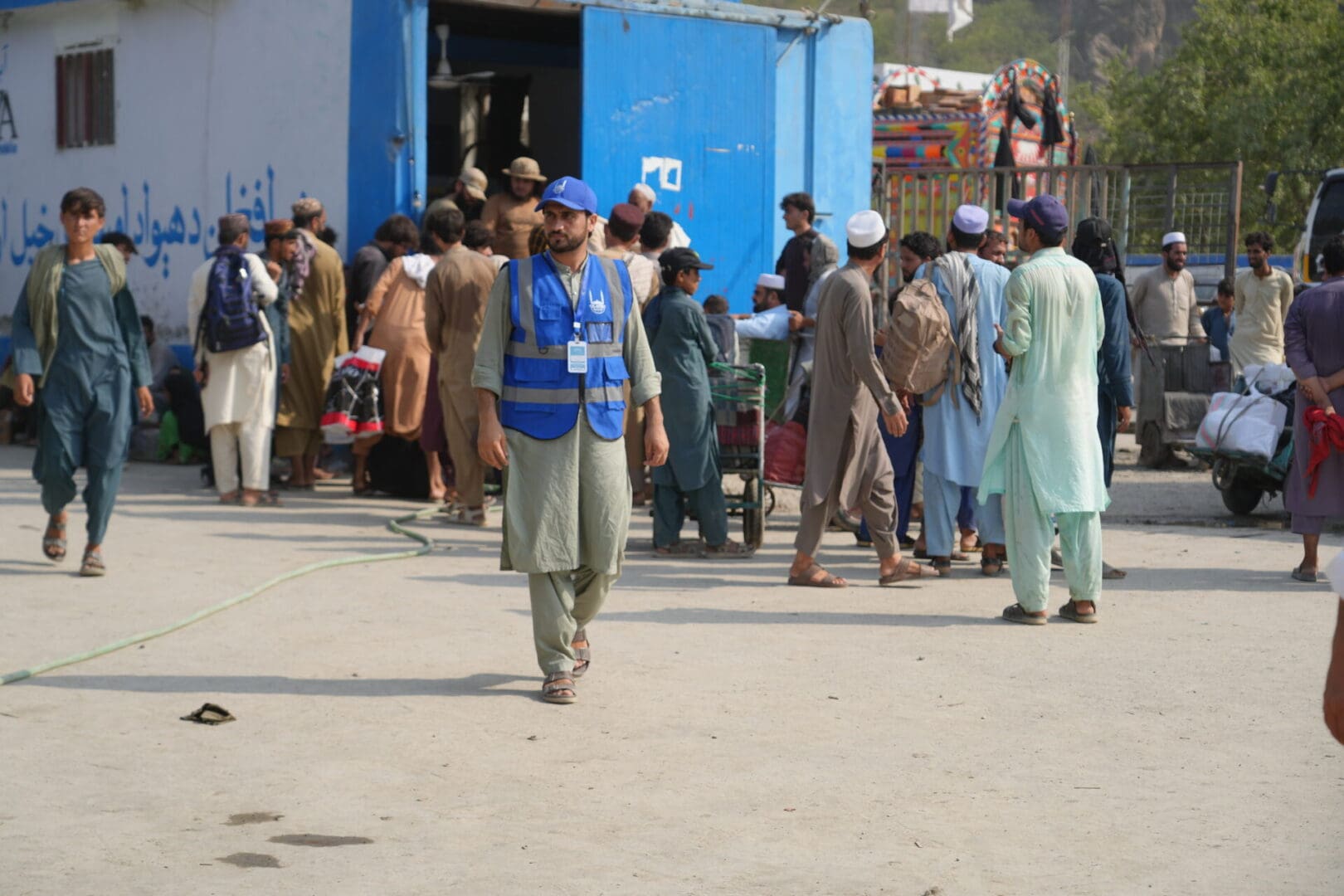
In August 2025, the Islamic Relief team visited the Torkham border between Afghanistan and Pakistan, where 200-250 more families arrive every day. Many come with limited resources and faces challenges providing documentation and accessing shelter, healthcare, and education.
Amid decades of hardship at home, many Afghans have travelled to neighbouring countries in search of stability and opportunities. The ongoing mass returns have been prompted by deportation initiatives targeting undocumented migrants.
On the front line of the response
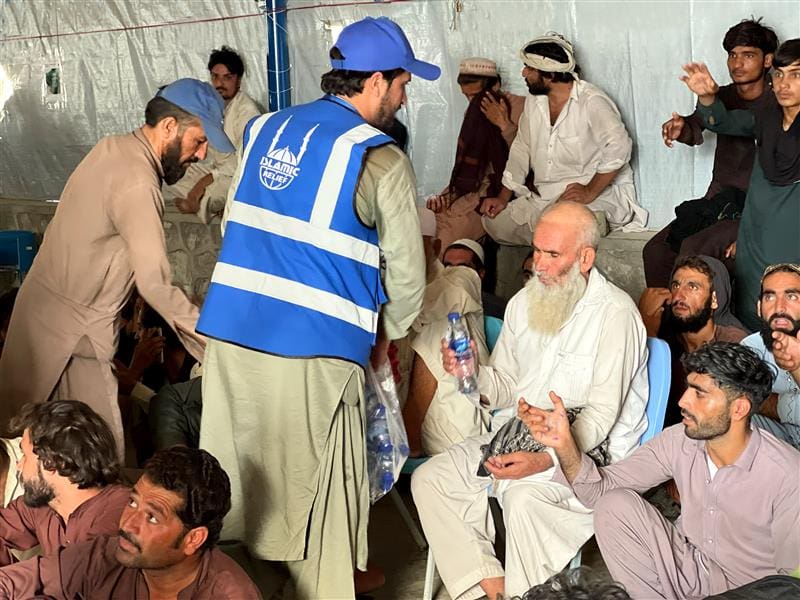
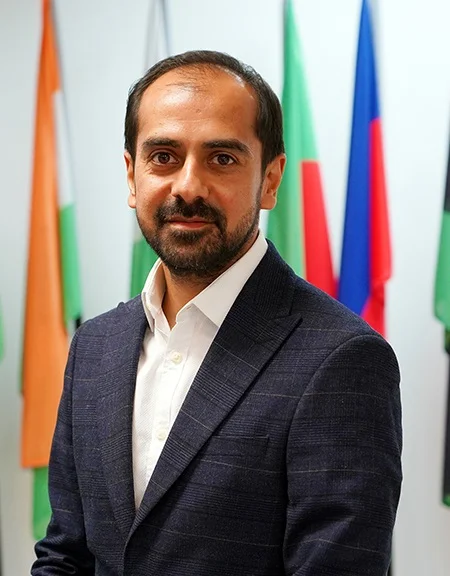
From morning until late evening, Islamic Relief staff work tirelessly to welcome and support the returnees. “I start my work at 8am [and work until] 4:30pm, but some days, due to the high number of returnees, we work until evening to provide much-needed services,” says Kifayatullah Afghan, Project Assistant for Islamic Relief.
“We are a team of 3 community mobilisers – 2 men and 1 woman – and we provide refreshment kits with fresh water, biscuits, and juice to each returnee.”
Alongside this, Islamic Relief also runs an information desk at the bordering, helping provide the new arrivals with information.
“Every day I meet between 200 and 250 people,” explains Laila Mohammadi, Islamic Relief’s female community mobiliser at Torkham. “I screen them to see who has documentation and who does not. Then I give them information about the services they can access from Islamic Relief and other partners on the ground, such as the IOM, UNHCR, and others.”
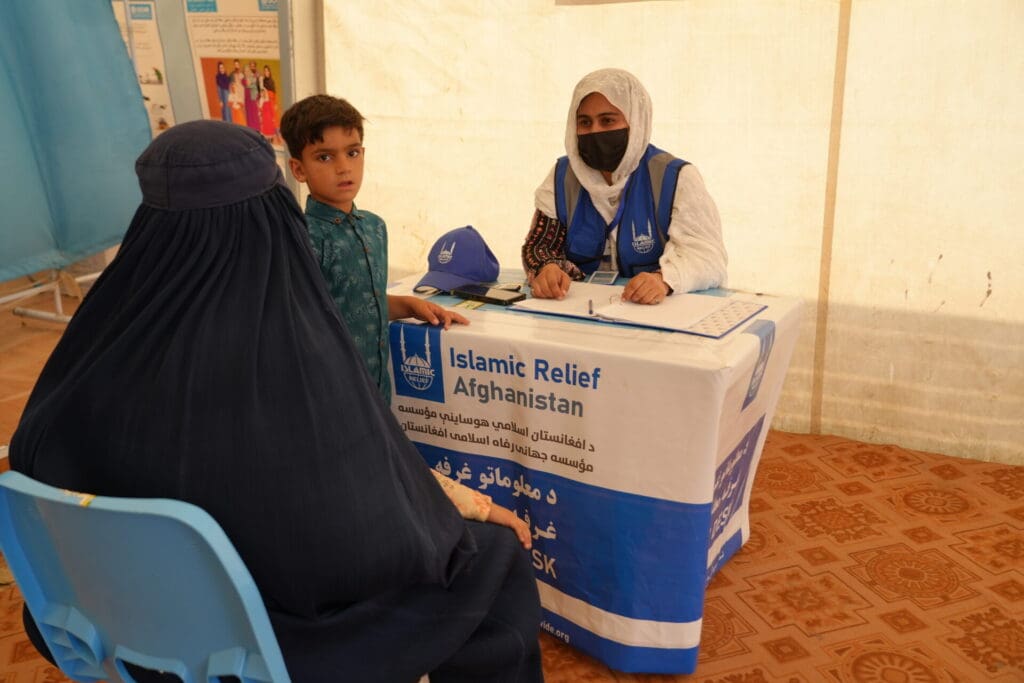
Many of the returnees are coming back to Afghanistan after years and decades away, and sometimes after having had to leave their host countries without much preparation. For these returnees, Islamic Relief’s assistance is vital.
“I came from Pakistan, and when I reached Torkham, Islamic Relief was there. The refreshment kit, water, biscuits, juices, and guidance at the information desk made a real difference. We felt welcomed and appreciated. I truly thank Islamic Relief for the good behaviour and support,” says Ahmad, 50.
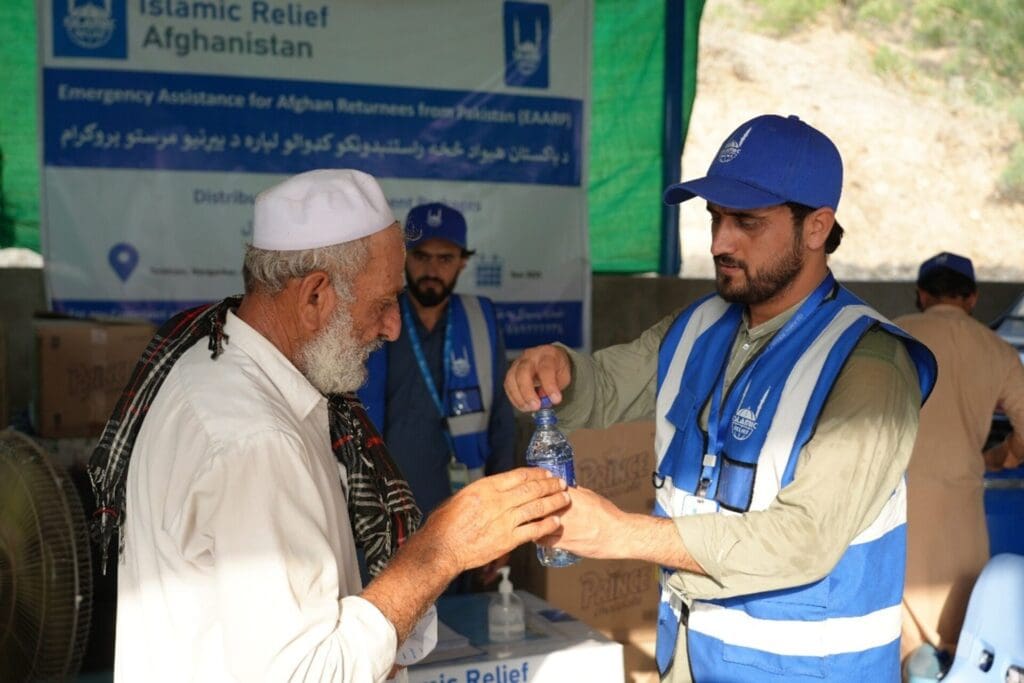
Another returnee, Abdul, a 35-year-old father of 3, said: “I have relatives in Nangarhar, but no home and nowhere to live. I have to rent a house, which is very difficult. The refreshment kit and information from Islamic Relief helped me feel safer and more welcomed.”
Beyond the border point
Islamic Relief’s work with returnees does not end at the border. At Omari Camp, around 15 minutes away by car, we have set up 200 emergency tents to provide temporary shelter for the most vulnerable families. To restore the environment, 300 trees have been planted, and there are plans to install three solar charging stations so returnees can charge their phones and other electronic devices, helping them to contact their relatives and rebuild connections.
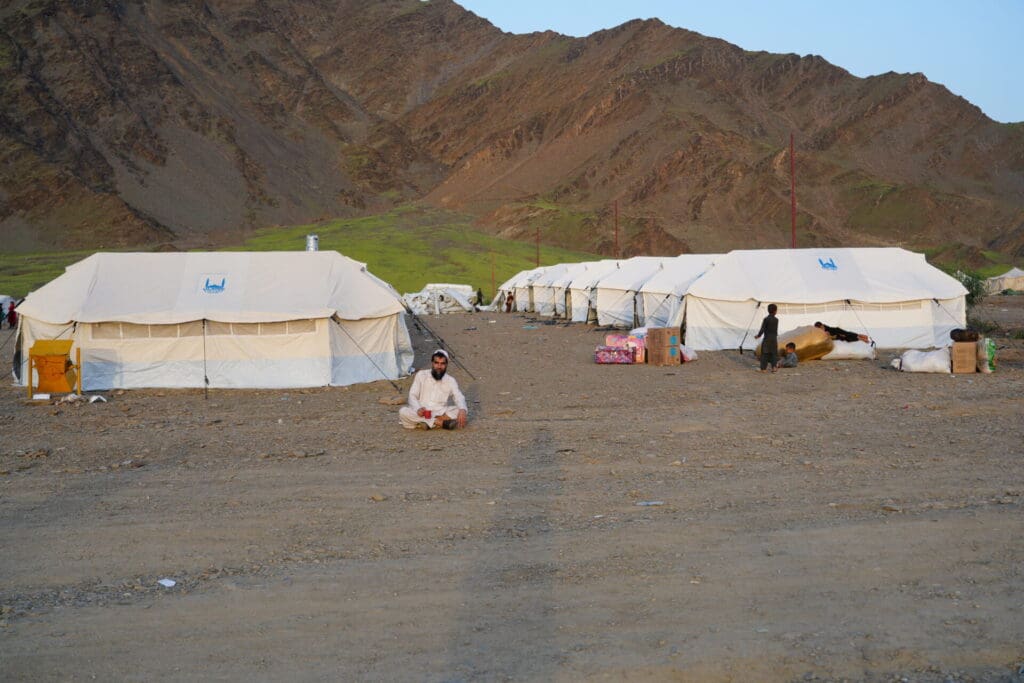
Kifayatullah from Islamic Relief stresses that the returnees need much more than refreshments and temporary shelter. “Many returnees have no homes and no way to rebuild their lives. They urgently need adequate housing, access to water and sanitation, and sustainable livelihoods. Without these, families cannot live with dignity.”
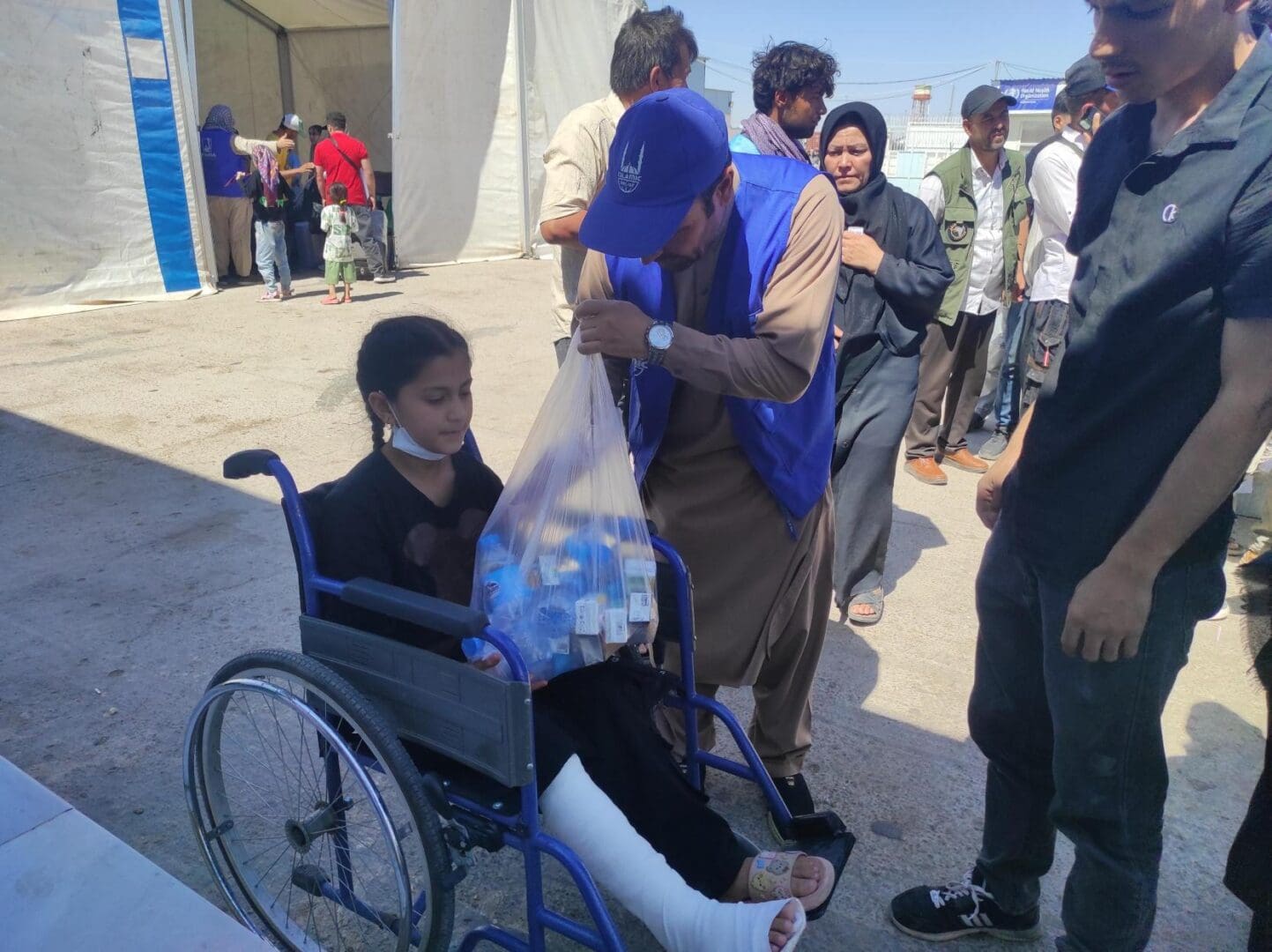
As well as at the Torkham border, Islamic Relief is also providing support at Kandahar (Spin Boldak), where we are distributing refreshment kits, and in Herat (Islam Qala) where we’re operating an information desk, distributing refreshment kits and have hired cleaners to improve conditions at the border. These services are helping families to access essential items, understand available support, and navigate the challenges of resettlement.
A call for urgent action
Islamic Relief is prioritising the most vulnerable, offering care, dignity, and hope as families returning to Afghanistan start again from nothing. But the needs are immense. We are calling for coordinated international engagement to address this humanitarian emergency. Without immediate assistance, the situation could worsen, leading to deeper poverty, increased displacement, and instability.
With your support, Islamic Relief can offer a helping hand to vulnerable people in Afghanistan and elsewhere. Donate now.