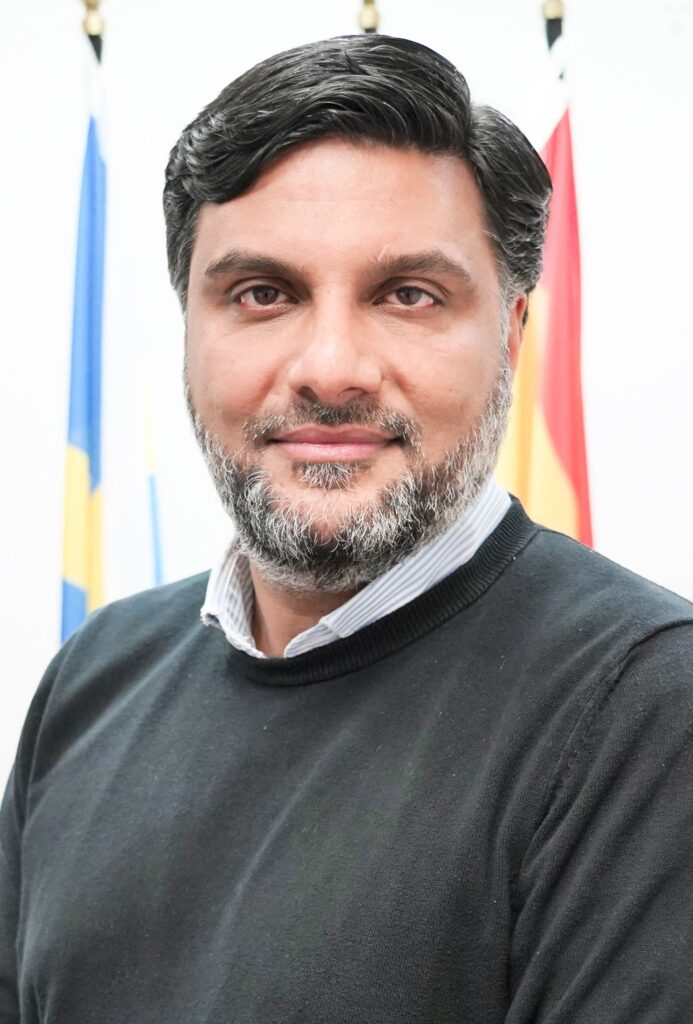


Hana el Abdallaoui, a member of Islamic Relief’s emergency team in Morocco, describes the nightmare wrought by Friday’s powerful earthquake.

A short time after arriving in Morocco, my colleagues and I glimpsed a little of the terror felt by survivors of Friday’s monster earthquake. Before our car had even left the airport, an aftershock struck and we had to jump out and rush to safety.
Everywhere, panicked people flooded out of the airport, frightened that the building would collapse, as many others have done.
It was a frightening moment.
When things seemed to settle, we continued our journey. Our first destination was Marrakech city centre, where we began assessing the humanitarian situation. We found people lining the streets: facing their second night in the open, they huddled in blankets. Some had succumbed to exhaustion, but others, traumatised and afraid of the aftershocks, couldn’t sleep.
They told us their homes had been damaged by the earthquake, and the ongoing aftershocks made them too afraid to return.
Ruined villages and grief-stricken families
The situation in Morocco right now is a waking nightmare. The current death toll is nearly 3,000, but everyone here fears the true total is much higher: there are reports that entire villages have been flattened in the High Atlas mountains, the epicentre of the disaster.
Ambulance and rescue crews are working tirelessly to get to the remote communities in the disaster zone, but progress is painstakingly slow, thanks to the challenging conditions.
The humanitarian situation in the mountains is said to be particularly dire, so my colleagues and I were determined to find out as much as we could. Early on Sunday morning, we travelled 80km to reach the province of Chichaoua. Meeting up with the Moroccan Red Crescent, a voluntary relief association, we journeyed to some of the worst hit villages in the Adassil region.
Among the communities we visited was Tikekht, which rescue workers had only just managed to reach earlier that day. Of the 80 people who lived in the village only 6 survived. Every house was completely destroyed.
Grief-stricken residents told us that the quake killed their families. One person lost a staggering 18 relatives. A weeping woman said her whole family was dead, and now she was alone.
Tagadirt village was home to 70 families. 18 people died, among them a woman due to give birth within days. We spoke to a man whose family-in-law passed away: he found them under the rubble of their home.
Earthquake survivors in desperate need of aid

These shocking numbers gave some idea of the loss, which is of a magnitude impossible to put fully into words. Traumatised people grieving lost loved ones wanted to talk to us, to express their pain and sorrow. Counselling could help them, but right now survival itself is the most urgent concern.
Many people had only the clothes in which they stood. They desperately needed food, tents, and hygiene items – including female sanitary products.
The governor of Adassil told us that around 5,000 buildings in the area had collapsed. It was a stark reminder that a massive undertaking lies ahead: that of rebuilding the homes and communities devastated by this disaster.
The people of Morocco have already endured so much, and we at Islamic Relief will do everything in our power to help.
Islamic Relief has launched a £10 million appeal to help earthquake survivors. We are assessing the most critical needs and identifying local humanitarian organisations we can work with to deliver vital aid.
Support survivors: donate to our Morocco Earthquake Fund now.
BROWSE OTHER OPINIONS
FEATURED OPINIONS
- Saving our home: Time for urgent action on World Environment Day
- Gaza one year on: Endurance and exasperation
- Away from the headlines there is an opportunity for real climate action
- How the Core Humanitarian Standard guides and inspires my safeguarding work
- Leave in Hope: the end of the Bonn conference
MOST POPULAR TOPIC
View More