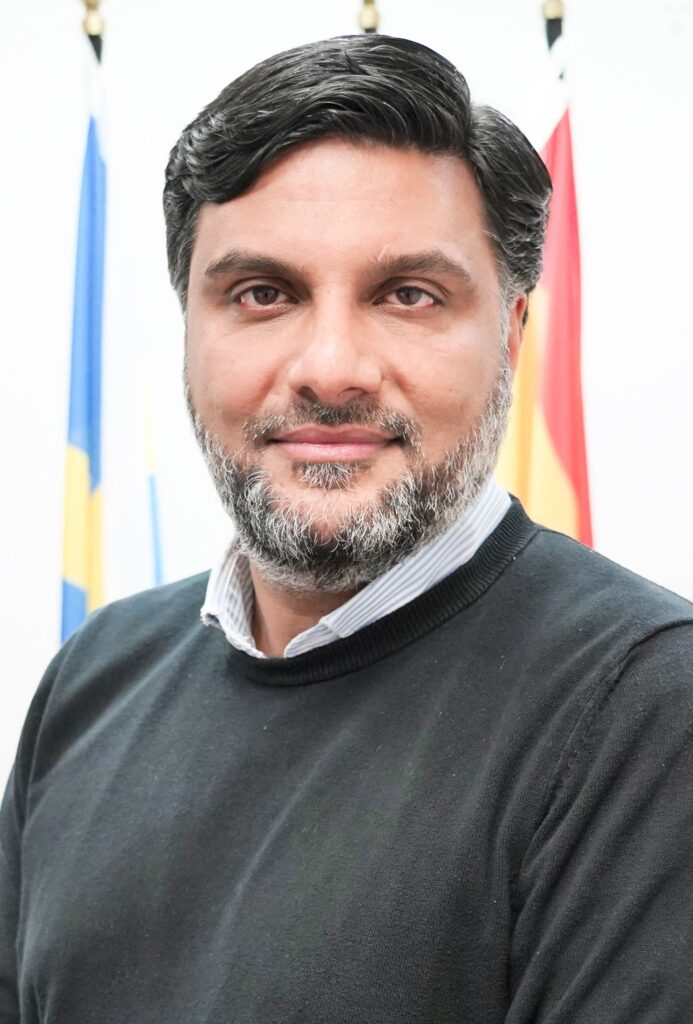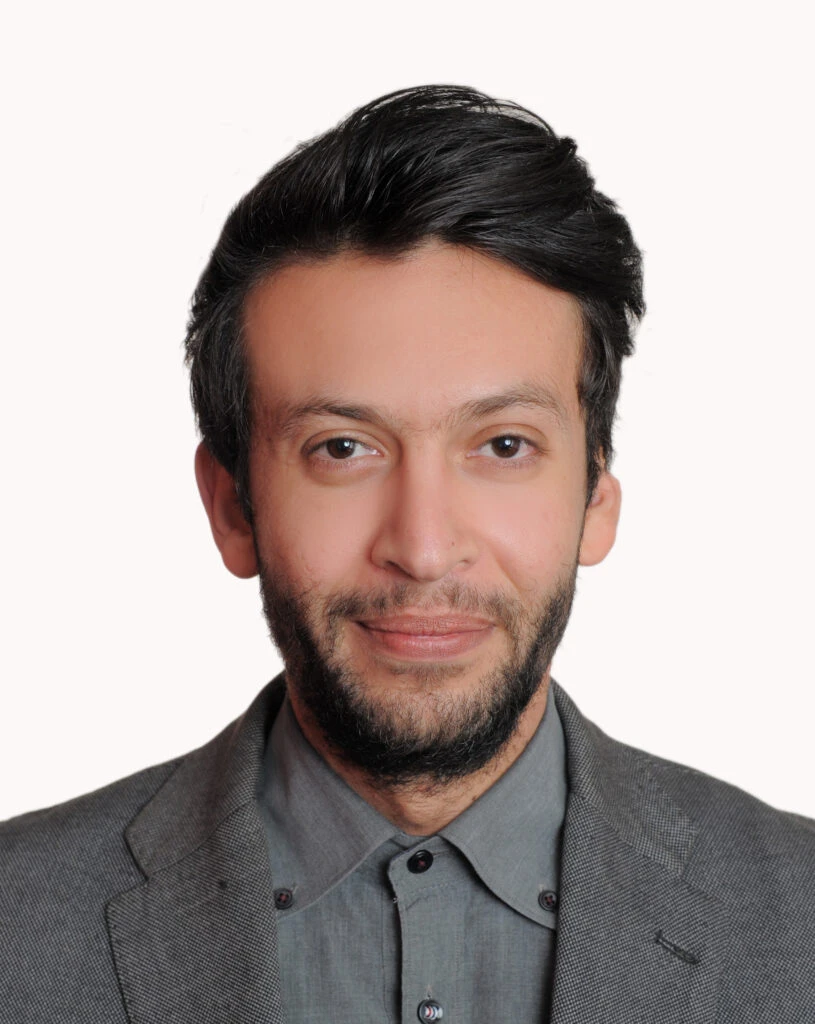
In his third blog for Islamic Relief, regional media creator for the Middle East and Eastern Europe, Khaled Al-Wakeel, recalls his first exciting – and exhausting – qurbani season.
Before joining Islamic Relief, I had some knowledge of our seasonal qurbani programme, but I had no real idea what it entailed or how busy a time of year it can be our organisation. Is it less or more busy than usual? Is it similar to Ramadan? This year, I found out.
I was able to help Islamic Relief Jordan’s International Programmes Department with monitoring the process from start to finish – from the selection of animals in Romania, where our supplier this year was based, all the way to the distribution in Jordan.
Coming from the background I do – a farm boy who used to literally deliver sheep with his bare hands – I wasn’t afraid of not being up to the task, but I was concerned about the timeframe. We had so much to do in just 2 days and a very short window to ensure the meat was delivered on the first day otherwise all our planning would have been for nothing.
I packed everything I needed, gathering all my equipment and the enthusiasm that I always muster when going to a new a country and said: ‘Let’s go!’
Sunday
A full day of running errands before my departure on Monday – 1 day before Araft day (the day before Eid al-Adha). Having packed, I drag my 32kg luggage to the office to collect anything else I need to bring. I can fit my tripod alongside some vests and 2 banners, but I can’t add anything else. My flight is at 2:40pm and our driver, Abu Ahmad, takes me to the airport after exchanging some currency and what not.
Monday
Arriving at the Airport in the capital, Bucharest, is like diving straight into a Zero Hour tactical mission . I land around 9:30pm and arrive at the hotel around 10:15pm After eating something it is already midnight. I hastily prepare for the next day, knowing I have to wake up and be ready to go at 6:30am in order to be at the farm around 8 as it’s in a different district.
Tuesday – Arafat Day
6am: Up and ready! As the supplier and I disembark at said time I am full of excitement to be spending a full day with the sheep, inspecting them and checking them to make sure they were fit for qurbani.
6:30am: We hit the road heading towards a district 2-and-a-half-hours away from Bucharest called Costanta, passing by fields of hay, sunflowers, and endless views of greenery. Because it is Arafat, I am receiving messages of early Eid congratulations from friends and family all around the world.
One of them is an episode of Gogglebox featuring the show Challenge Anneka , in which the host tackles a series of challenges and tasks. I can’t help thinking I might be facing a challenge of my own in just a short time.
8am: When we get to the farm, I am observing and taking everything in, making sure I am shown all the sheep due to go to the slaughterhouse in the first 2 days and making sure there were enough extra sheep in case some of the flock are unfit for qurbani. While filming, I am thinking of all my friends and family who’d laugh at seeing me surrounded by sheep if this was a Gogglebox episode.
8pm: A full day passes travelling and inspecting sheep at 2 farms, one that is 5 minutes away from the slaughterhouse and another 45 minutes away . It was already 8pm and, I can assure you after chasing 4,000 sheep around all day I was as exhausted as if I’d been running 40 kindergartens. However, I am still excited as we plan our day for tomorrow – the first day of Eid.
8:30pm: After interviewing all the parties I need to and making sure I know who would be carrying out the slaughter and other steps, I head to a hotel next to the slaughterhouse. I start working on some photos I’ve taken, grab a cup of coffee and something to eat, then sleep, ready to rise early for Eid prayers and the start of the sacrifice, as we must stick to schedule if we want the first lot to be on the airplane that night heading to Amman and to our rightsholders.

Wednesday
7am: It’s morning and we’re inspecting the facilities according to our policies. Bassam, a Syrian Bedouin butcher from Hammah, who will be conducting the sacrifice says a blessing: “BismAllah, Allah Akbar”(In the Name of Allah, Allah is the greatest).
8am: We start the process. It goes all the way from the sacrifice up to the packaging of the meat.
5pm: The first truck is loaded and ready and we head to the airport. While the meat is loaded onto the plane, we’re making sure we have all the documentation from the slaughterhouse, the veterinarian, and the customs paperwork. The airplane load master is working hard to distribute the weight on the aircraft and before we know it, it’s 3am and the plane leaves for Amman.
Thursday
It’s 3:30am already – everything went according to plan, it felt so quick. It is a huge operation, we are talking about more than 90 people – between farm, transport, slaughterhouse, freight and airport customs/airplane employees – making all of this happen, and the next day we do it all again.
9:40pm: It’s time for me to leave, I’ll arrive in Amman around 4am.
Here to answer the call
During this whole process I was reporting back to the Jordan office where colleagues were getting ready to distribute the meat to more than 18 locations and more than 8,000 households around the country.
More than 76 colleagues in Jordan travelled to the north and south of the country, all the while liaising with government officials, security forces, community-based organisations. It felt like a beehive, buzzing to answer the call.

Qurbani meat is distributed in Jordan to families in need
Last day of distribution, Sunday
As I witness the last day of distribution back in Jordan, I hear so many stories and meet so many families that have come to benefit from the meat we are distributing. Some have come from refugee camps, others from low-income areas, everyone is truly experiencing the bliss and joy of this Eid celebration all thanks to our generous supporters and their kind donations.
One person that stands out is an older lady who approached me. I’d like to share her story with you. I’ll call her Um Khaled, although that’s not her name. She is taking care of 2 abandoned children plus 6 of her own, has no income and an unemployed partner.
She told me with a half-smile that she will be so happy to go home today as she can take some meat with her and cook something for the family that they’ve not been able to have for months.
She tells me more of the difficulties she faces and, after speaking to her, I know that I’ll remember that smiling mother whenever I think of the 8,000+ households our distribution reached this year.
I feel empowered, like the rest of my colleagues, that through you – our generous donors – we can provide help to 1 of those lonesome forgotten women in Jordan. Knowing our Amanah have been delivered.
Please carry on supporting us so we can reach to more people like her than ever before, donate now to Islamic Relief Worldwide.
Khaled is one of our regular bloggers. Each month, he’ll share stories of his work with Islamic Relief.
BROWSE OTHER OPINIONS
FEATURED OPINIONS
- Saving our home: Time for urgent action on World Environment Day
- Gaza one year on: Endurance and exasperation
- Away from the headlines there is an opportunity for real climate action
- How the Core Humanitarian Standard guides and inspires my safeguarding work
- Leave in Hope: the end of the Bonn conference
MOST POPULAR TOPIC
View More