Gaza: Israel threatens to ban major aid organizations as starvation deepens

Despite claims by Israeli authorities that there is no limit on humanitarian aid entering Gaza, most major international NGOs have been unable to deliver a single truck of lifesaving supplies since 2 March.

Instead of clearing the growing backlog of goods, Israeli authorities have rejected requests from dozens of NGOs to bring in lifesaving goods, citing that these organizations are “not authorized to deliver aid.” In July alone, over 60 requests were denied under this justification.

This obstruction has left millions of dollars’ worth of food, medicine, water, and shelter items stranded in warehouses across Jordan and Egypt, while Palestinians are being starved.

“Anera has over $7 million worth of lifesaving supplies blocked from entering Gaza – including 744 pallets of rice, enough for six million meals, blocked in Ashdod just kilometers away,” said Sean Carroll, President and CEO of Anera.

Many of the NGOs now told they are not “authorized” to deliver aid have worked in Gaza for decades, are trusted by communities and experienced in delivering aid safely. Their exclusion has left hospitals without basic supplies, children, people with disabilities, and older people dying from hunger and preventable illnesses, and aid workers themselves going to work hungry.

The obstruction is tied to new INGO registration rules introduced in March. Under these new rules, registration can be denied on the basis of vague and politicized criteria, such as alleged “delegitimization” of the state of Israel. INGOs warned the process was designed to control independent organizations, silence advocacy, and censor humanitarian reporting. This new bureaucratic obstruction is inconsistent with established international law as it entrenches Israel’s control and annexation of the occupied Palestinian territory.

Unless INGOs submit to the full registration requirements, including the mandatory submission of details of private donors, complete Palestinian staff lists and other sensitive information about personnel for so-called “security” vetting to Israeli authorities, many could be forced to halt operations in Gaza and the West Bank, including East Jerusalem, and remove all international staff within 60 days. Some organizations have even been issued a seven-day ultimatum to provide Palestinian staff lists.

NGOs have made clear that sharing such data is unlawful (including under relevant data protection laws), unsafe, and incompatible with humanitarian principles. In the deadliest context for aid workers worldwide, where 98 percent of those humanitarians killed were Palestinian, NGOs have no guarantees that handing over such information would not put staff at further risk, or be used to advance the government of Israel’s stated military and political aims.

Today, INGOs’ fears have proven true: the registration system is now being used to further block aid and deny food and medicine in the midst of the worst-case scenario of famine.

“Since the full siege was imposed on 2 March, CARE has not been able to deliver any of our $1.5 million worth of pre-positioned supplies into Gaza,” said Jolien Veldwijk, Country Director of CARE. “This includes critical shipments of food parcels, medical supplies, hygiene kits, dignity kits, and maternal and infant care items. Our mandate is to save lives, but due to the registration restrictions civilians are being left without the food, medicine, and protection they urgently need.”

“Oxfam has over $2.5 million worth of goods that have been rejected from entering Gaza by Israel, especially WASH and hygiene items as well as food,” said Bushra Khalidi, Oxfam Policy Lead. “This registration process signals to INGOs that their ability to operate may come at the cost of their independence and ability to speak out.”

These restrictions are part of a broader strategy that includes the so-called “GHF” scheme – a militarized distribution mechanism promoted as a humanitarian solution. In reality, it is a deadly tool of control, with at least 859 Palestinians killed around “GHF” sites since it began operating.

“The militarized food distribution scheme has weaponized starvation and curated suffering. Distributions at GHF sites have resulted in extreme levels of violence and killings, primarily of young Palestinian men, but also of women and children, who have gone to the sites in the hope of receiving food,” according to Aitor Zabalgogeazkoa, MSF emergency coordinator in Gaza.

Both the “GHF” scheme and the INGO registration process aim to block impartial aid, exclude Palestinian actors, and replace trusted humanitarian organizations with mechanisms that serve political and military objectives. They come as the government of Israel to escalate its military offensive and deepen its occupation in Gaza, making clear these measures are part of a broader strategy to entrench control and erase Palestinian presence.

“At this point, everyone knows what the correct, humane answer is, and it’s not a floating pier, airdrops or the “GHF.” The answer, to save lives, save humanity and save yourselves from complicity in engineered mass starvation, is to open all the borders, at all hours, to the thousands of trucks, millions of meals and medical supplies, ready and waiting nearby,” said Sean Carroll of Anera.

We call on all states and donors to:

  • Press Israel to end the weaponization of aid, including through bureaucratic obstruction, such as the INGO registration procedures.
  • Insist that INGOs are not forced to share sensitive personal information, in violation of the General Data Protection Regulation (GDPR), or compromise staff safety or independence as a condition for delivering aid.
  • Demand the immediate and unconditional opening of all land crossings and conditions for the delivery of lifesaving humanitarian aid.

Editor’s note

  • The occupied Palestinian territory is the deadliest setting for aid workers worldwide, with Palestinian staff accounting for 98% of aid worker fatalities: 509 out of 517 killings that took place between 2023-2025, according to the Aid Worker Security Database.
  • On 6 May, 55 organizations warned that Israel’s new INGO registration measures are a grave threat to humanitarian operations and international law.
  • On 1 July, 200+ organizations called for immediate action to end the deadly Israeli distribution scheme, including the so-called “GHF” in Gaza, revert to the existing UN-led coordination mechanisms, and lift the Israeli government’s blockade on aid and commercial supplies.
  • On 23 July, 100+ organizations warned that, as mass starvation spreads across Gaza, our colleagues and those we serve are wasting away.
  • On 29 July, the Integrated Food Security Phase Classification (IPC) wrote that the worst-case scenario of famine is currently playing out in the Gaza Strip.
  • Israel has consistently denied restricting the amount of aid allowed into Gaza, including throughout the period of July 2025, when most of the denials discussed in this statement were issued.
  • On 31 July, OHCHR wrote that since 27 May, at least 1,373 Palestinians have been killed while seeking food; 859 in the vicinity of the “GHF” sites and 514 along the routes of food convoys. Most of these killings were committed by the Israeli forces.
  • On 4 August, a Palestinian nurse in Gaza was killed when an airdrop struck him.
  • On 5 August, it was reported that Israeli authorities are planning for the full occupation of the Gaza Strip.
  • On 6 August, UN agencies and NGOs warned that without immediate action most international NGO partners could be de-registered by Israel in coming weeks.
  • On 6 August, the Dutch Data Protection Authority (DPA) concluded that Israel’s information requests under the INGO registration process risk violating the General Data Protection Regulation (GDPR). The DPA advised that INGOs should not comply with these requests, and that the only solution is for Israel to amend its requirements and for the relevant ministries to issue a formal protest.
  • On 7 August, MSF released a report stating food distributions in Gaza run by the so-called “GHF” are sites of “orchestrated killing and dehumanization” that must be shut down.”
  • On 10 August, Save the Children reported the deaths of 100 children due to starvation in Gaza since October 2023.
  • On 12 August, a group of UN Special Rapporteurs on human rights published a letter to the Israeli government, stating deep concern that the INGO registration measures “weaken the ability of INGOs to operate independently and impartially and to carry out their humanitarian and human rights work without interference or fear of reprisal” and that “that the obligation to report on INGO personnel, in the context of occupation, armed conflict and serious violations of international law, could raise serious protection and reprisal concerns.”

Signatories:

1. Action Against Hunger (ACF)

2. A New Policy

3. ACT Alliance

4. Action For Humanity

5. ActionAid Denmark

6. ActionAid International

7. All We Can

8. Alliance Sud

9. American Friends Service Committee (AFSC)

10. Americares

11. Anera

12. Asamblea de Cooperación por la Paz

13. Bystanders No More

14. Campaign Against Arms Trade

15. Canadian Foodgrains Bank

16. CARE

17. Caritas Internationalis

18. Caritas Jerusalem

19. Caritas Middle East and North Africa

20. Caritas Switzerland

21. Center for Jewish Nonviolence

22. Charity & Security Network

23. Children Not Numbers

24. Christian Aid

25. Churches for Middle East Peace (CMEP)

26. CISS – Cooperazione Internazionale Sud Sud

27. Committee to Protect Journalists

28. Cooperation Canada

29. COORDINADORA VALENCIANA ONGD

30. DanChurchAid

31. Danish Refugee Council (DRC)

32. Department of Service to the Palestinian Refugees

33. Diakonia

34. Diakonie Katastrophenhilfe

35. EDUCO

36. Embrace the Middle East

37. Emergency – Life Support for Civilian War Victims Ong Ets

38. Entreculturas

39. Forum Ziviler Friedensdienst e.V. (Pro Peace)

40. Frieda – the Feminist Peace Organization

41. Friends Committee on National Legislation (FCNL)

42. Fund for Global Human Rights

43. Glia

44. HEKS/EPER (Swiss Church Aid)

45. HelpAge International

46. Humanitarian Coalition

47. Humanity Auxilium

48. Humanity & Inclusion – Handicap International

49. Humanity First UK

50. INARA

51. Insecurity Insight

52. International Development and Relief Foundation (IDRF)

53. INTERSOS

54. Islamic Relief

55. Jahalin Solidarity

56. Japan International Volunteer Center (JVC)

57. Jüdische Stimme für Demokratie und Gerechtigkeit in Israel/Palästina JVJP Switzerland

58. KinderUSA

59. Kvinna till Kvinna Foundation

60. La Coordinadora de Organizaciones para el Desarrollo (The Spanish Development NGO Platform)

61. Médecins du Monde France

62. Médecins du Monde International Network

63. Médecins Sans Frontières (MSF)

64. MedGlobal

65. Medical Aid for Palestinians (MAP)

66. medico international

67. medico international schweiz

68. Mennonite Central Committee (MCC)

69. Middle East Children’s Alliance

70. MPower Change Action Fund

71. Muslim Aid

72. NORWAC – Norwegian Aid Committee

73. Norwegian Church Aid

74. Norwegian People’s Aid (NPA)

75. Norwegian Refugee Council (NRC)

76. Oxfam

77. Palestinian Children’s Relief Fund (PCRF)

78. PANZMA – Palestinian Australian New Zealand Medical Association

79. PARCIC

80. Pax Christi International

81. Peace Watch Switzerland

82. People in Need (PIN)

83. Plan International

84. Polish Humanitarian Action (PAH)

85. Portuguese Platform of Development NGOs

86. Premiere Urgence Internationale (PUI)

87. Project HOPE

88. Relief International

89. Sabeel-Kairos UK

90. Save the Children International

91. Secours Islamique France (SIF)

92. Solidar Suisse

93. Solidarités International

94. SWISSAID

95. Terre des Hommes Italy

96. Terre des Hommes Lausanne

97. The Eastern Mediterranean Public Health Network (EMPHNET)

98. The United Church of Canada

99. United Against Inhumanity (UAI)

100. Vento di Terra

101. War Child Alliance

102. Weltfriedensdienst e.V.

Quick donate
arrow-up

Quick donate

Join Our Newsletter

We will always treat your personal information with the utmost care and will keep it private (read our privacy policy). You can opt out at any time by contacting us via email at IslamicReliefWorldwide@irworldwide.org or by clicking the unsubscribe button on one of the emails you receive from us.

© Copyright 2026 Islamic Relief Worldwide, Inc. All rights reserved. Registered Charity No. 328158
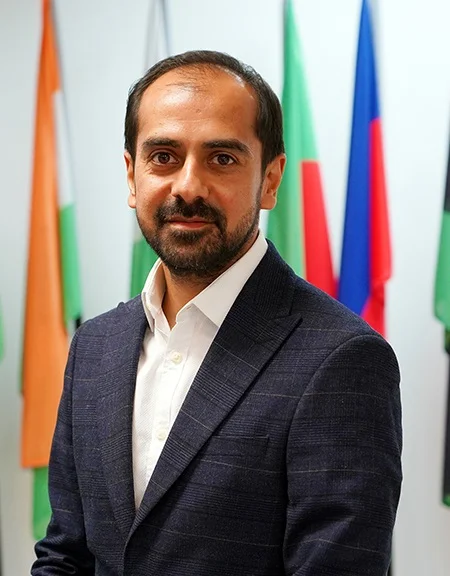
Zia Salik

Interim Director of Islamic Relief UK

Zia Salik was appointed Interim Director of Islamic Relief UK in 2025, and brings with him over 18 years of third sector experience. He has held several leadership roles within Islamic Relief UK, including National Events Coordinator, National Community Fundraising Manager, Head of Fundraising, and Deputy Director. Zia has led national fundraising strategies, managed large-scale campaigns and events, and contributed significantly to volunteer development, donor engagement and public outreach. 

As Interim Director, Zia oversees multiple teams and contributes to strategic planning, operational leadership and organisational growth. He is recognised for his expertise in major donor management, public speaking, media engagement and community fundraising. Zia has been instrumental in building strong community networks and delivering impactful campaigns.

Before joining Islamic Relief, Zia served as Programmes Manager at Humber All Nations Alliance, where he led organisational growth, project delivery and funding proposals.

Zia is a seasoned leader committed to social justice, who brings a collaborative, mission-driven approach to his work, helping to amplify voices and maximise impact in the charity sector.

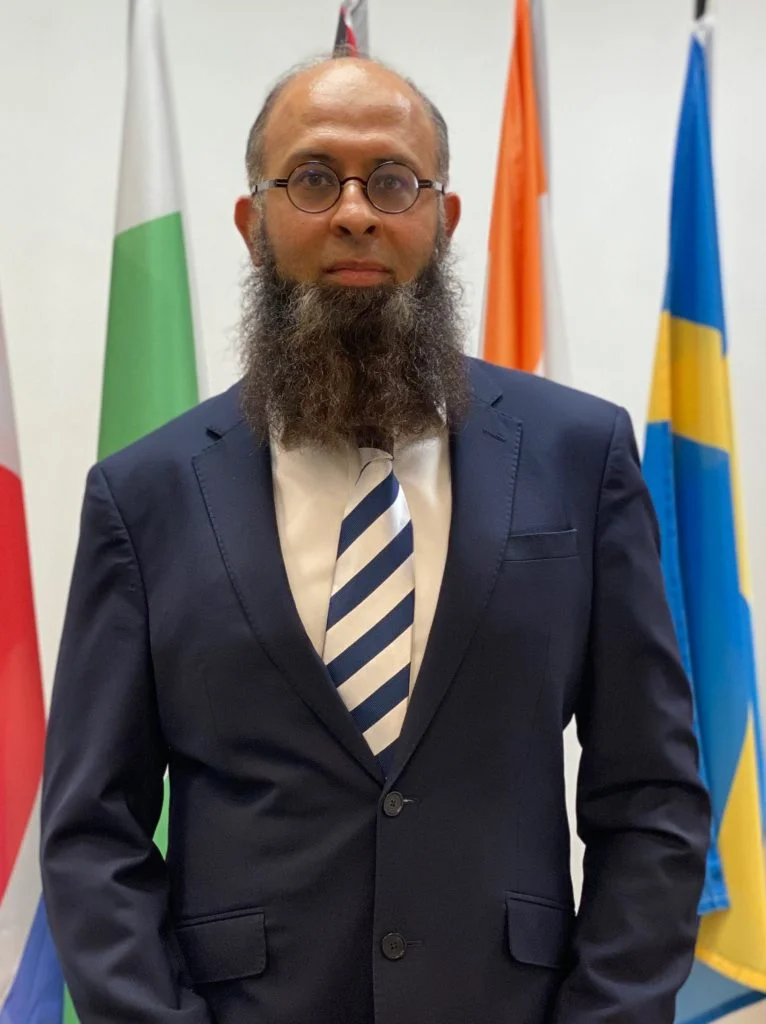
Nadeem Malik

Interim CEO of Islamic Relief Worldwide (IRW) and Managing Director of Humanitarian Academy for Development (HAD)

Nadeem has a wealth of experience from the charity, statutory and private sectors. He is the Managing Director of HAD (a division of IRW) which is a centre of excellence seeking to empower the humanitarian sector and maximise its effectiveness and from October 2025 will serve as our interim CEO. 

Before joining Islamic Relief, for nearly a decade at the General Medical Council — a globally recognised professional regulator — Nadeem managed strategic relationships with Chief Medical Officers and senior leaders. Prior to that, he served as the UK Director of Islamic Help, engaging closely with many international non-governmental organisations and playing a key role in fundraising and media activities.

In 2000, Nadeem was admitted as a solicitor. He spent nearly 8 years as a Partner at a law firm specialising in employment, regulatory and charity law. He has published papers, including in the Modern Law Review, and chapters in books.

Nadeem is deeply committed to strengthening civil society organisations and the charity sector, and throughout his career has focused on improving foundations for future generations and building strong networks. Nadeem has particular expertise working in matters of Learning and Development, especially personal and professional development, combining Islamic principles with modern techniques and interventions. He is also especially interested in psychological perspectives and cognitive distortions. He has designed and delivered training to thousands of people for nearly 3 decades.

As well as individual development and growth, Nadeem has spent 20 years working with organisations to manage and lead people to improve outcomes and efficiencies. He is a Consultant Coach, qualified at ILM Level 5 in Effective Coaching and Mentoring and ILM Level 7 in Executive and Senior Leadership Coaching. He was Chair of the Independent Advisory Group for the Professional Standards Department of West Midlands Police for 4 years, where he was awarded recognition for his ‘Outstanding Work.’

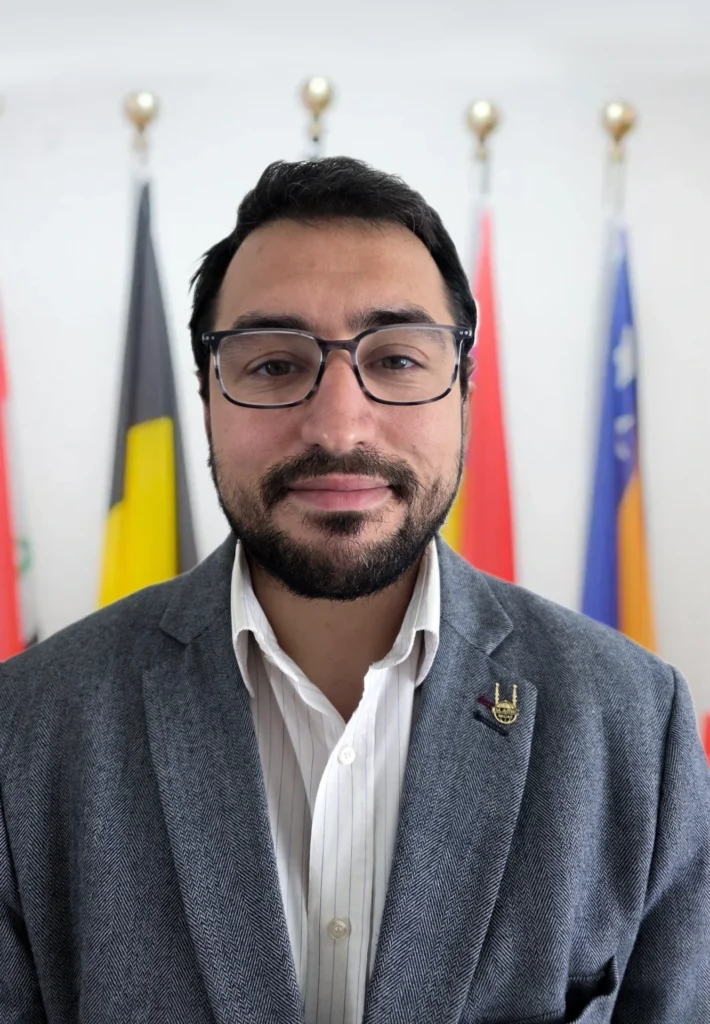
Saqeb Mueen

Director of External Relations and Advocacy

Saqeb joined Islamic Relief in 2025, bringing with him extensive experience in strategic communications and policy engagement. He served for more than two decades at the Royal United Services Institute for Defence and Security Studies (RUSI), including eight years as Director of Communications, where he led high-impact media campaigns and worked with major international organisations including the European Union, NATO as well as national governments. Saqeb was also the first Head of Communications for Tech Against Terrorism, an online counter-terrorist organisation backed by the United Nations, where he developed and established its public relations capabilities. Saqeb has advised UK Muslim organisations on communications and public affairs as they foster interfaith initiatives and tackle racism and Islamophobia. Saqeb holds a BA in History from University College London and an MA in War Studies from King’s College London. He is a member of the Chartered Institute of Public Relations, is a fellow of the Royal Society of Arts and was a Senior Associate Fellow at RUSI.
Asha Ahmad

Director of People and Culture

Asha joined Islamic Relief in 2025 with the aim of working with colleagues to create an environment where everyone feels valued, empowered, and motivated to contribute meaningfully to our shared mission.

Asha has more than 20 years of experience in HR leadership across a range of industries, holding roles at Thomson Reuters, BMW, Movado Group and others. She is passionate about building strong, resilient teams and fostering positive workplace cultures where individuals are empowered to thrive, contribute and do their best work.

Asha holds a BA in Management, Economics and Law, as well as a BA in Business Studies. She is an Associate Member of the Chartered Institute of Personnel Development.

new director

Director of Network and Resource Development

Adnan joined Islamic Relief in 2004 as a regional fundraiser in the UK. He worked in multiple roles over 10 years at Islamic Relief UK, including setting up the first digital team and leading the growth of digital fundraising and engagement. Adnan also led numerous fundraising and marketing campaigns, which played a significant part in the growth of Islamic Relief UK.

Having moved to Islamic Relief Worldwide in 2014, Adnan has held different roles that have helped grow Islamic Relief’s global digital footprint into new geographic territories, supporting Islamic Relief members with their digital and marketing growth as well as developing new products and initiatives for the Islamic Relief family.

Adnan graduated in Industrial Design and Technology from Loughborough University. He has since completed an Advanced Diploma in Business Administration from Durham University and a Diploma in Digital Marketing from the Institute of Data and Marketing.

Nadeem Azhar

General Counsel

Nadeem joined Islamic Relief Worldwide in September 2022. He has worked in the charitable sector for over a decade.

He studied Modern History and Politics at Manchester University, and at the University of Law in London before qualifying as a solicitor in 2011.

Nadeem is an experienced corporate, commercial and governance lawyer, having worked with various faith-based and grant making charities as well those in health and education settings. He was a partner at a law firm in London before moving in-house where he focused on setting up and restructuring charities and social enterprises.

Most recently, Nadeem was Lead Counsel at Mind, a leading mental health charity, where he co-authored a new federation agreement, revamped legal processes, and played a major role in developing its strategic and fundraising partnerships.

Nadeem has been a charity trustee for the Seafarers Charity, as well as many grant-making bodies and theatre companies.

Salaheddin Aboulgasem

Interim Director of Global Family Development

Salaheddin joined Islamic Relief UK in 2006 and over the next 7 years held multiple roles, including Community Fundraiser and Campaigns Manager, before joining Islamic Relief Worldwide in 2013.

Since then, Salaheddin has been instrumental in the launch and growth of new Islamic Relief member offices in Ireland, Spain, Norway and Finland, as well as providing essential support and guidance to existing members, including Italy, where he served as CEO for 3 years.

In 2023, Salaheddin became Deputy Director of Global Family Development and in this role has continued to play a crucial part in steering Islamic Relief’s growth and expansion. He has also led global fundraising and media engagement for major emergencies including the Türkiye-Syria earthquake and Libya floods. Salaheddin became the Interim Director of Global Family Development in 2025.

Salaheddin holds a master’s degree in International Development and is actively involved in several community-led initiatives. He is currently the Vice President of the International Union of Muslim Scouts and Deputy Chair of the UK Muslim Scouts Fellowship as well as Chair of the South Birmingham Muslim Community Association.

Board of Directors
Javed Akhtar

Director of Finance

Javed Akhtar has more than a decade of experience at Islamic Relief, having worked in a similar role between 2003-2014. In that role he strove to implement wide-ranging financial and accounting processes which aided in the transparent nature in which Islamic Relief now operates.

Javed also has diverse experience across the private sector, having worked at American chemicals and pharmaceutical giant DuPont, shipping firm FedEX and technology consultancy company Accenture. In all his roles, he prioritises using the latest technologies to improve monitoring and reporting at every level. Javed’s commitment to embracing digital end-to-end technology, enhancing accountability to our stakeholders and promoting financial transparency is ensuring that we remain at the forefront of financial developments in the sector.

By training, Javed is a chartered accountant with a Master’s degree in NGO Management with Charity Accounting and Financial Management from Cass Business School.
Board of Directors
Affan Cheema  

Director of International Programmes

Affan Cheema is an experienced leader who has spent 25 years working in the international aid sector on poverty eradication in Asia, Africa and the Middle East. He has worked in fast onset emergencies, protracted crisis and development environments whilst working for Islamic Relief Worldwide and Care International. He is also a trustee of South West International Development Network (SWIDN).

Through his career Affan has held numerous roles including institutional fundraising, programme and grant management, and programme quality assurance.  Affan’s leadership has helped Islamic Relief Worldwide secure the highly coveted Core Humanitarian Standard (CHS), seen as the sector’s premier benchmark for operational excellence.

Affan completed his BA in Economics and Geography from University of London (School of Oriental and African Studies) and his MSc in Development Administration and Planning from the University of Bristol. He is PRINCE2 qualified, is a keen sportsman and recently co-edited a book entitled -Islam and International Development: Insights for working with Muslim Communities-.
Board of Directors
Dr Hossam Said

Managing Director, Humanitarian Academy for Development (HAD)

For nearly three decades Dr Hossam has provided the strategic vision to manage, lead and develop a range of international humanitarian interventions around the world.

At the start of his career, Dr Hossam served on the Board of Directors of the Egyptian Medical Syndicate, before moving to Islamic Relief Worldwide to manage the core global business activities as International Programmes Director.

During this time the organisation increased its global reach, gaining both domestic and international repute and credibility. Dr Hossam has also served on the Islamic Relief Worldwide Board of Management and Executive Committee for the past 15 years; sharing responsibility for strategic organisational development and the change management process, whilst forging strong relationships with many other charities.

Dr Hossam gained an MBA from Aston Business School in 2004 and graduated as a Medical Doctor from Cairo University in 1981.
Board of Directors
Martin Cottingham  

Director of External Relations and Advocacy

Martin Cottingham joined Islamic Relief in 2012 as IRUK Media Relations Manager, and was appointed Head of Communications in 2015 before taking up his current position as Director of External Relations and Advocacy for Islamic Relief Worldwide.

Martin has helped Islamic Relief to increase its mainstream media profile and expand its campaigning work, producing hard-hitting advocacy reports on floods in Pakistan (2011) famine in Somalia (2012) disaster risk reduction (2013) and aid to Afghanistan (2014). He has over 20 years’ experience working in media, communications and marketing roles for international development and environmental charities.

Martin graduated from the University of London with a degree in English and Drama (1982-85) then trained as a journalist with a postgraduate diploma at City University (1986-87). He has previously worked for Christian Aid as Editor of Christian Aid News and Media Relations Manager (1988-97) for Oxfam as Regional Campaigns Manager (1997-2000) and at the Soil Association as Marketing Director (2001-2006), as well as working for a wide range of organisations as a freelance writer, researcher and communications consultant.

Tufail Hussain

Director of Islamic Relief UK

Tufail Hussain has 17 years’ experience in the humanitarian and development sector, leading on marketing and fundraising campaigns for several organisations before joining Islamic Relief UK in 2016 as Deputy Director. Tufail was appointed Director of Islamic Relief UK in 2019 and in 2021 provided valuable leadership as interim CEO of Islamic Relief Worldwide.

Tufail is driven by a passion for empowering disadvantaged youth and mentors a number of young people. He also works to strengthen engagement between British Muslims and wider society. Under his leadership, Islamic Relief UK has significantly increased its income and developed successful partnerships with communities across the country. He has travelled around the world to raise awareness of major emergencies such as the Syria, Yemen and Afghanistan crises and the floods in Pakistan and Sudan.

A father to 5 daughters and a son, Tufail is also a sports enthusiast and passionate Liverpool FC supporter. Tufail has run the London Marathon twice, raising over £35,000 for humanitarian causes.

Before joining Islamic Relief he was CEO of Orphans in Need, where he oversaw a new strategy that increased income from £2 million to £9 million in 3 years and opened up new UK and international offices. Tufail is also a trustee of the Muslim Charities Forum and a Director of TIC International (Islamic Relief Worldwide’s clothes recycling and trading arm).
Waseem Ahmad

Chief Executive Officer

Waseem Ahmad joined the Islamic Relief family over 24 years ago, serving as Programme Officer in the Balochistan province of south-western Pakistan before becoming Head of Programmes in Pakistan. Waseem then moved to Oxfam and Tearfund before returning to Islamic Relief to establish our mission in Malawi. Later serving as Head of Programme Funding and Partnerships, Waseem led the response to major crises across the globe, including the East Africa drought, Pakistan earthquake and the Indian Ocean Tsunami.

Waseem then served for nearly 6 years as our Director of International Programmes, during which time the charity secured and retained the coveted Core Humanitarian Standard certification in recognition of the quality of our programming. He was appointed CEO of Islamic Relief in May 2021.

With a special interest in community mobilisation and infrastructure, Waseem received an MSc in Project Planning and Management from the University of Bradford, as well as an MSc in Economics from Arid Agriculture University in Rawalpindi, Pakistan.

Waseem has also worked for Lepra Health in Action and is a member of the International Civil Society Centre’s Board of Trustees. The father-of-3 enjoys walking and playing football, and is a keen birdwatcher.