As world leaders negotiate at COP27, Islamic Relief’s Conflict and Social Cohesion Advisor, Edward Channer, explains the interaction between climate change and conflict, and the impact their nexus has on communities.
COP27 provides a critical opportunity to consider policies that support those most affected by climate extremes. Nowhere is the climate crisis felt more deeply than in already fragile contexts.
The climate crisis squeezes communities that are already under pressure, impacting economic productivity and sustainability, gender-based violence, mental and physical health, social cohesion, education, hope and opportunity.
It is no surprise then that the climate crisis, by further entrenching existing fragility, exposes communities to a higher likelihood of violence and conflict. Whether at the local, national or regional level, it can instigate and exacerbate conflicts within and between communities.
This is the climate-conflict nexus – the interaction and mutually supporting system that devastates lives and livelihoods. It throws people into a seemingly endless cycle, where climate extremes make communities more vulnerable to conflict, and where conflict in turn reduces people’s resilience to climate shocks.
Climate and conflict in Mali
This cycle is a familiar process in Mali, where climate extremes have become commonplace. Droughts are more frequent and heavy rainfall, leading to floods, is increasingly long-lasting. Such extremes have led to the degradation and loss of fertile land – a catastrophic consequence considering that 62.4 per cent of those employed in Mali are working in rain-fed agriculture. Projections anticipate the situation will worsen, with the annual number of very hot days (daily maximum temperatures above 35°C) forecast to increase.
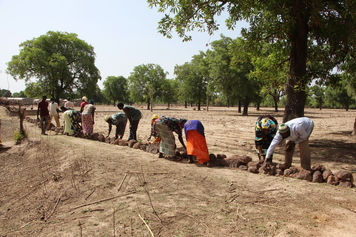
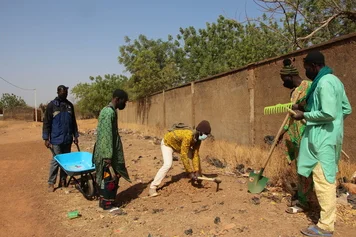
Bomboya community preparing ground against runoff water
At the same time, conflict in Mali has expanded over the past decade. The emergence of armed groups in the north – against a backdrop of turbulent national and regional dynamics – set a trend of violence from 2012 onwards that would go on to extend its reach to the centre of the country.
This has led to large numbers of highly vulnerable internally displaced people (IDPs) living in regions where the pressure on land and resources is now even greater. Conflict and the climate crisis in Mali feed off one another and place the country in the cruel grip of the climate-conflict nexus.
Responding to the climate-conflict nexus
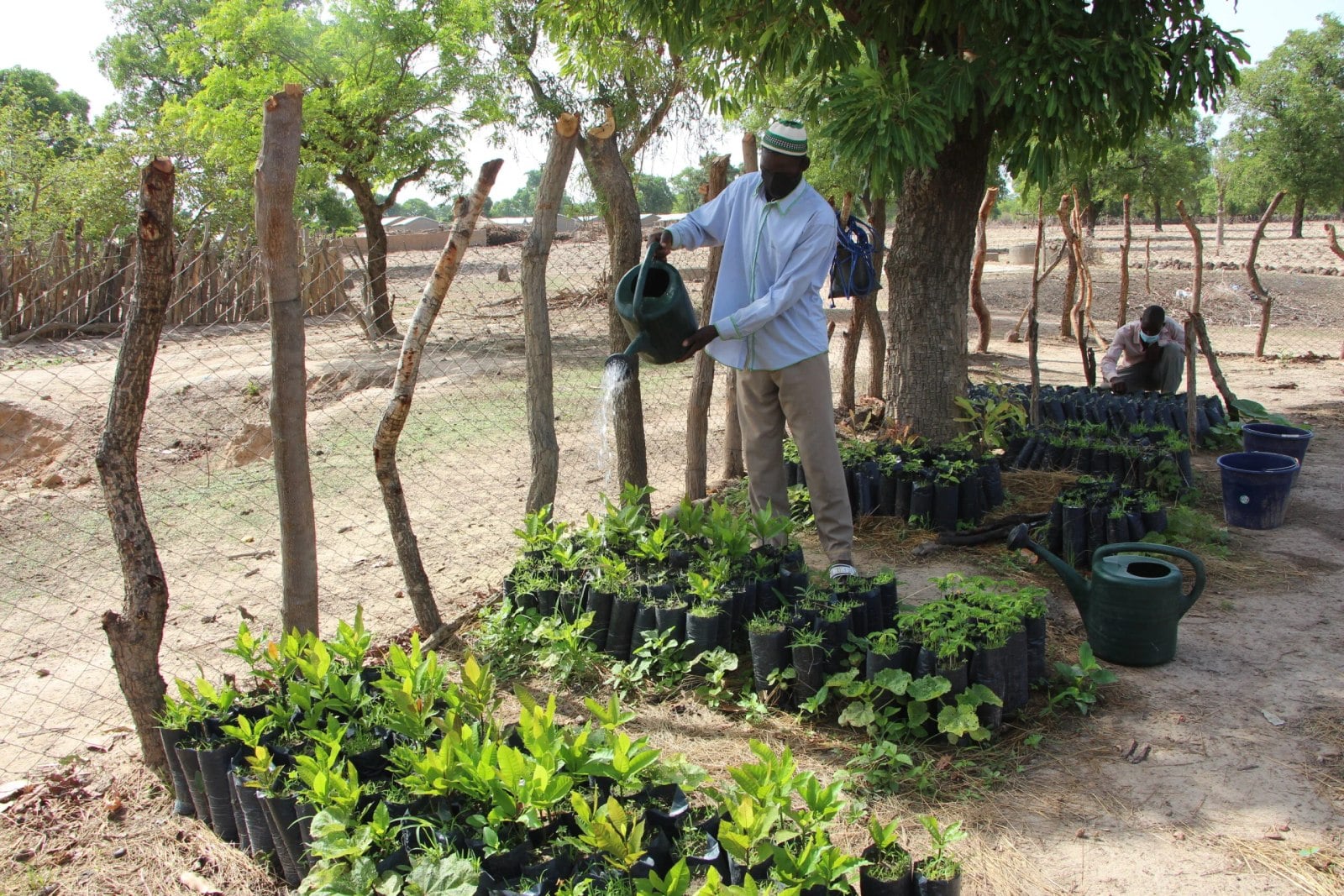
Islamic Relief supports communities experiencing these intense challenges to develop resilience in the face of the climate crisis while mainstreaming social cohesion and peacebuilding. We work to train communities on climate-adapted agricultural approaches and provide drought tolerant seeds.
We help communities to reduce their dependency on rainwater for agriculture by facilitating locally owned and managed boreholes and irrigation systems, which in turn boost climate resilience.
Training in seedbed preparation and maintenance
At the same time, we work to strengthen inclusive and representative community mechanisms so they may better serve local populations in preventing and responding to conflicts. Examples include working with communities to coordinate social cohesion committees consisting of women’s association leaders, youth leaders, religious leaders, people with disabilities and IDPs.
These are individuals that are trusted and respected in the community and so are capable of intervening when disputes emerge (over land or access to resources, for example). By doing so, these mechanisms combat the impact of the climate-conflict nexus within their own communities.
Helping pastoralists avoid conflict
Islamic Relief also provides farmers, herders and fishermen – groups in frequent conflict owing in part to the increasing pressure on productive land and natural resources – with training on instruments such as the pastoral charter. This tool establishes a shared understanding of the legal framework for cooperative land management. Again, this interrupts the climate-conflict nexus, helping different communities live and work together while increasing their resilience to climate shocks.
“Before, I was unaware of the law on the exploitation of natural resources, as were many people in the village,” Mahamadou, an agropastoralist in Séréré commune in the Circle of Gourma Rharous, told Islamic Relief.
“Conflicts related to the exploitation of these resources were very frequent between farmers, herders and fishermen in our locality, with some very serious cases that went all the way to the courts… Since this training was carried out by Islamic Relief in collaboration with the technical services involved in the field, the beneficiaries, including myself, have understood and are applying the texts related to the pastoral charter, which has helped to reduce conflicts in the locality.”
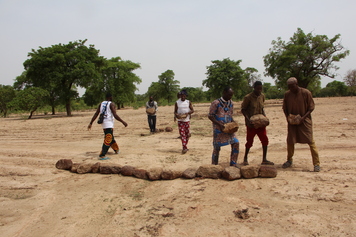
Daman community preparing their stony ground against runoff water
Islamic Relief’s work demonstrates the significance of a comprehensive approach that incorporates climate impacts and conflict sensitivity. While there is a growing body of literature on the climate-conflict nexus that supports this, the connection between communities suffering climate extremes and their vulnerability to conflict is lacking within climate policy responses.
As an explicit indication of this, the United Nations Development Programme identified in its study of climate funding per capita that extremely fragile states receive an average of $2.1 per person and fragile states receive $10.8 per person. By comparison, non-fragile states receive $161.7 per person.
If climate policies are to have real impact upon those most affected by the climate crisis, such as those in Mali, they need to reflect the reality of the climate-conflict nexus. COP27 is an opportunity to spread this message far and wide.
Help Islamic Relief continue its vital work supporting communities to rebuild their resilience to climate change and avoid conflict. Donate now.
BROWSE OTHER OPINIONS
FEATURED OPINIONS
- Saving our home: Time for urgent action on World Environment Day
- Gaza one year on: Endurance and exasperation
- Away from the headlines there is an opportunity for real climate action
- How the Core Humanitarian Standard guides and inspires my safeguarding work
- Leave in Hope: the end of the Bonn conference
MOST POPULAR TOPIC
View More