
A tidal wave of Afghan returnees in 2025 could be the most significant humanitarian crisis I’ve seen in my career

Islamic Relief Afghanistan’s Communication and External Relations Manager, Dahir Abdullahi, was part of a team that visited the Torkham crossing point near the Afghanistan–Pakistan border in April. He previously visited Herat City on the border with Iran, where thousands of Afghan returnees are arriving from with just the clothes on their backs. In this blog, he shares his experience of meeting and interviewing returnees.
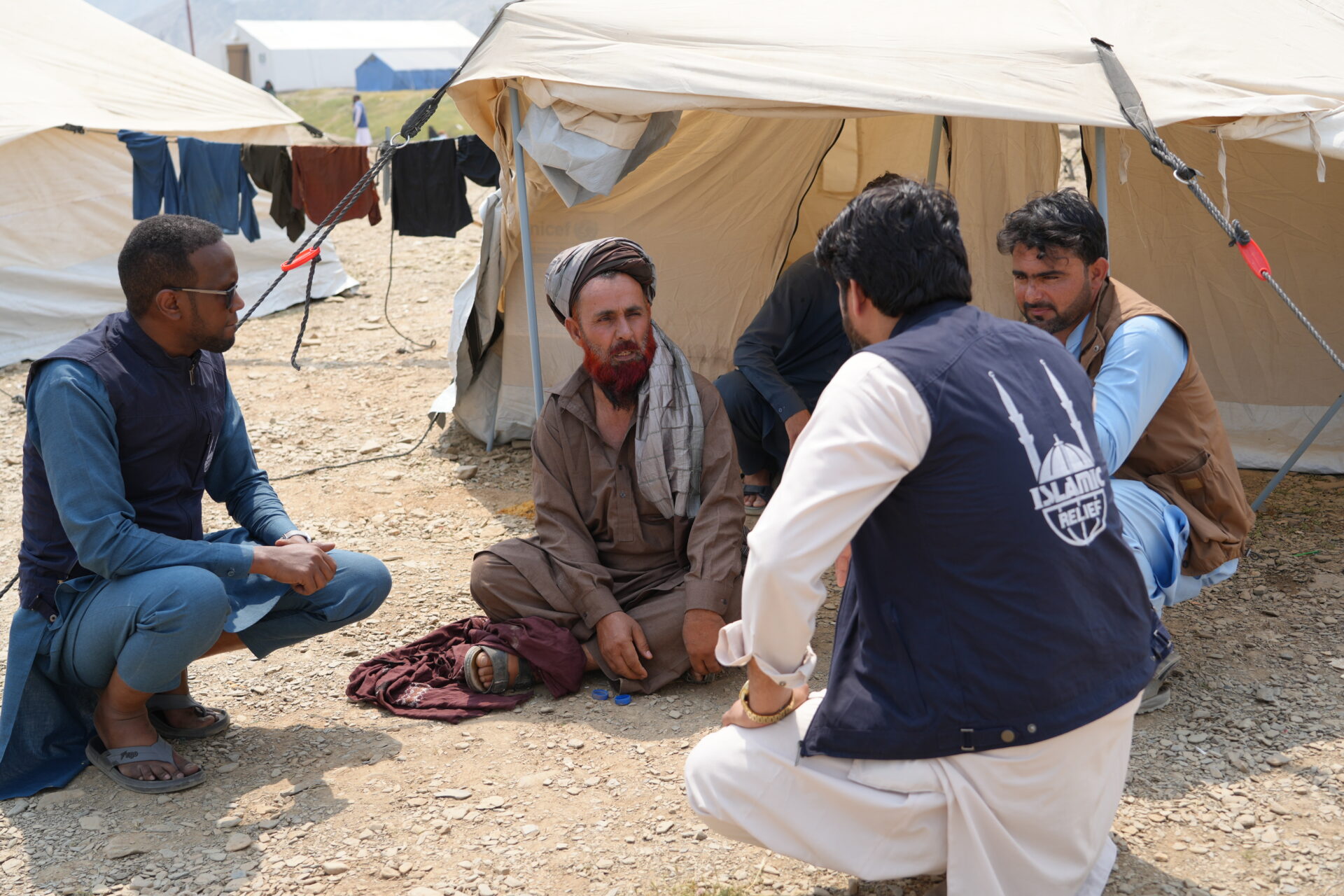
Dahir (left) engages with an Afghan returnee family at the Torkham crossing point in Nangarhar province

Reflecting on my 14 years of reporting on humanitarian crises in Africa and Asia, I can confidently say that nothing could have prepared me for what is unfolding in Afghanistan right now. I have a feeling that we are on the brink of witnessing one of the most significant humanitarian crises, potentially in decades or even in the last century.

I have previously covered 2 displacement emergencies: first, the massive influx of Somali refugees fleeing drought and famine in 2011, which overwhelmed Kenya’s Dadaab refugee camps with 130,000 new arrivals in just over 6 months. Second, Yemeni refugees seeking safety in Bosaso and Mogadishu in Somalia between 2015 and 2016, as conflict ravaged their homeland.

Yet, nothing could have prepared me for the sheer scale and severity of the return unfolding in Afghanistan right now before our very eyes.

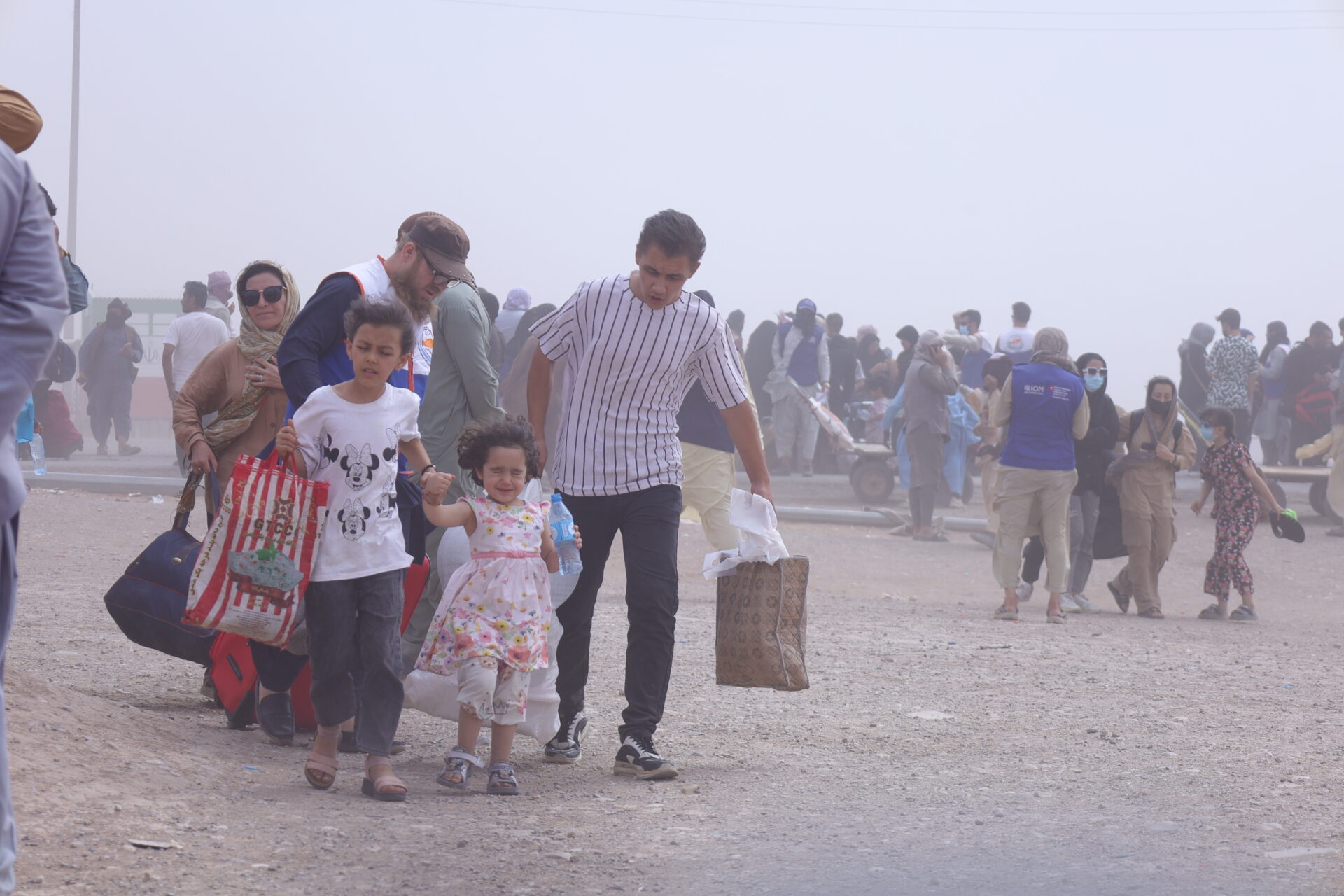
Putting this into perspective, between January and June 2025, nearly 1 million Afghans have returned from Iran and Pakistan. In June alone, over a quarter of a million returned from Iran through the key crossing point of Islam Qala in Herat province. Despite these staggering figures, the resources available for the returnees are inadequate, and, alarmingly, this crisis has received little attention on the global stage.

The humanitarian situation in Afghanistan has long been complex and protracted, and many Afghans have travelled to neighbouring countries in search of stability and opportunities. The ongoing mass returns have been prompted by deportation initiatives targeting undocumented migrants.

It’s hard to fathom the scale of this movement of people and the challenges that lie ahead for those coming home to a country still grappling with instability, a rapidly declining economy, and the scars of decades of conflict. The plight of these individuals and families tugs at my heartstrings.

Many are returning to find their homes destroyed, communities fractured, and resources stretched thin. This is not just a statistic or a headline – it’s a human story. Each returnee carries their own tale of hardship and resilience, and, as an observer of such stories, I feel it is my duty to amplify their voices.

Beneath the scorching sun, families employ every means at their disposal to shield their children from the unforgiving heat. A mother moistens a scarf, carefully wiping her children’s faces to bring them relief. The eldest child ingeniously knots a strip of bed sheet, creating a narrow shade for the family as they nestle on the dusty ground. Nearby, a brother tenderly drapes a handkerchief over his younger sister, securing its ends to their luggage to protect them from the relentless sun. In this harsh environment, their resourcefulness and care for one another shine through, demonstrating their love in these most challenging moments.

Forced from home

In a poignant account of displacement, Fatima, a 51-year-old mother who previously lived in Tehran, reflects on the harsh realities of being forcibly removed from her home. With an emotional tremor in her voice, she says, “They came to our home, didn’t even allow us to gather our belongings, and deported us immediately.”

 As tears fill her eyes, she adds, “We arrived this morning with just 3 bags. They will not allow us to sell our stuff or transport it across to Afghanistan in an orderly way.”
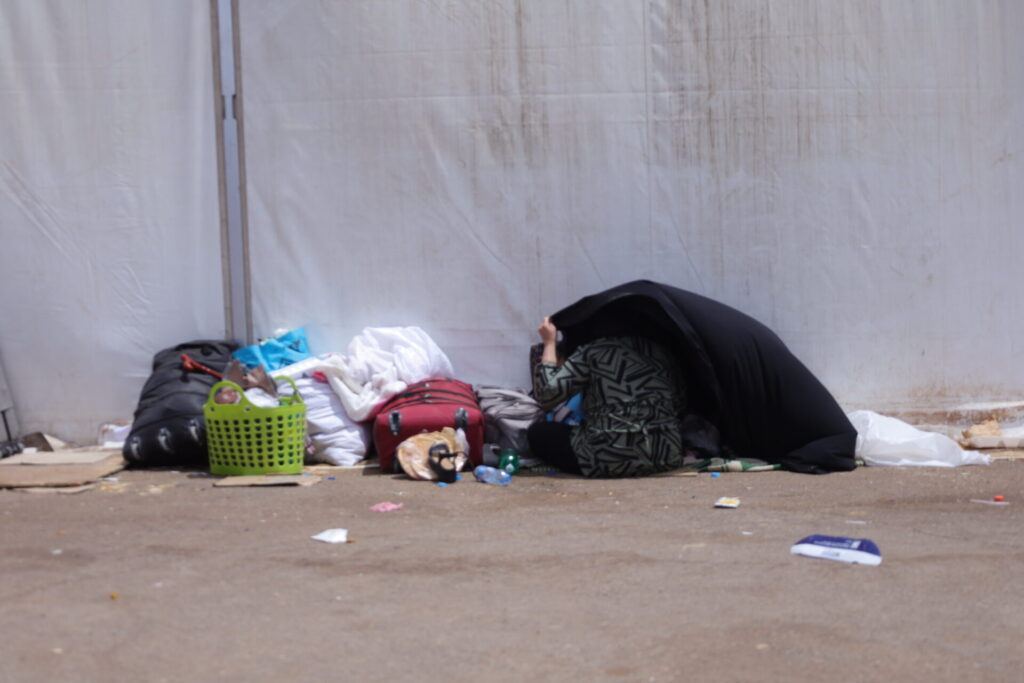
Fatima guards her family’s belongings while her son processes their documents with the border

Fatima, trying to find shelter from the sweltering heat under a piece of clothing, shares the challenges she faces after the loss of her husband. “He has passed away, and as the head of the family, I am now responsible for my 15-year-old son,” she explains. The family currently has no shelter and is waiting for a tent or someone to take them in, underscoring their precarious situation. “Even if I go to Herat, I have no home,” she adds.

The distress doesn’t end there. Fatima shares her son’s struggles: “I didn’t have a job in Iran, but my son worked as a street vendor. However, the police confiscated all his belongings.” Her plea is emphasised by the dismissive words of some locals in Iran: “You can complain if you want, but you are foreign nationals, you have no value here — leave our country.” Ultimately, this story sheds light on the profound challenges faced by individuals who are stripped of their dignity amid chaos and turmoil.

From a refugee to ruin

After 4 long years in Mashhad, Iran, Abdul returned to Afghanistan with his wife and 2 children, facing an uncertain future. His family spent 2 nights in a transit camp near the Islam Qala crossing point, along the Afghanistan–Iran border. They now live in a one-bedroom home in Herat City that his brother-in-law has temporarily offered them. “I struggled so much to find a home. I’m happy my family is settled,” Abdul reflected, aware that their dreams are now overshadowed by the need to survive.
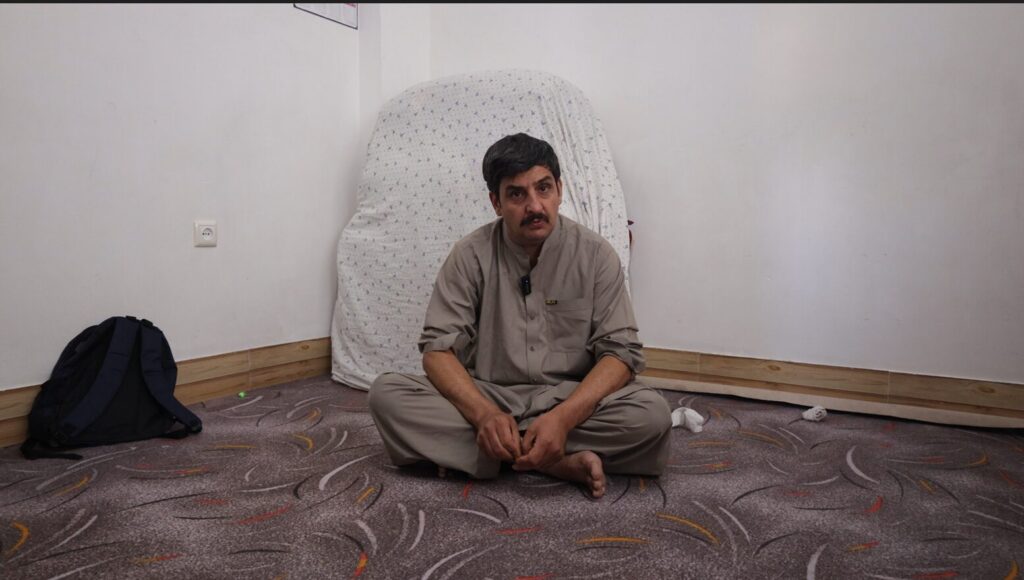
Abdul now shares a one-bedroom house with his family in Herat City, Afghanistan

Once a skilled mechanic leading a decent life, Abdul faced a harsh reality in his homeland. “My main problem is that I don’t have a job, which means I cannot feed my family. It’s unfair that my refugee life is better than life in my country,” he lamented, feeling the weight of his role as provider. His 19-year-old son, who dreamed of becoming an engineer, struggled with the disruption of his education, while his 7-year-old daughter missed her friends and the carefree joys of childhood.

Despite these challenges, hope still shines within him. “I hope to find a job soon, preferably as a mechanic or a driver.”

Driven back to darkness

As the borders reopen for returnees from Pakistan and Iran, a staggering reality unfolds for Afghan women and girls. Representing nearly half of those returning, they face significant barriers. They cannot pursue education beyond grade 6 or seek employment outside the health and education sectors, effectively shutting the door on their dreams.
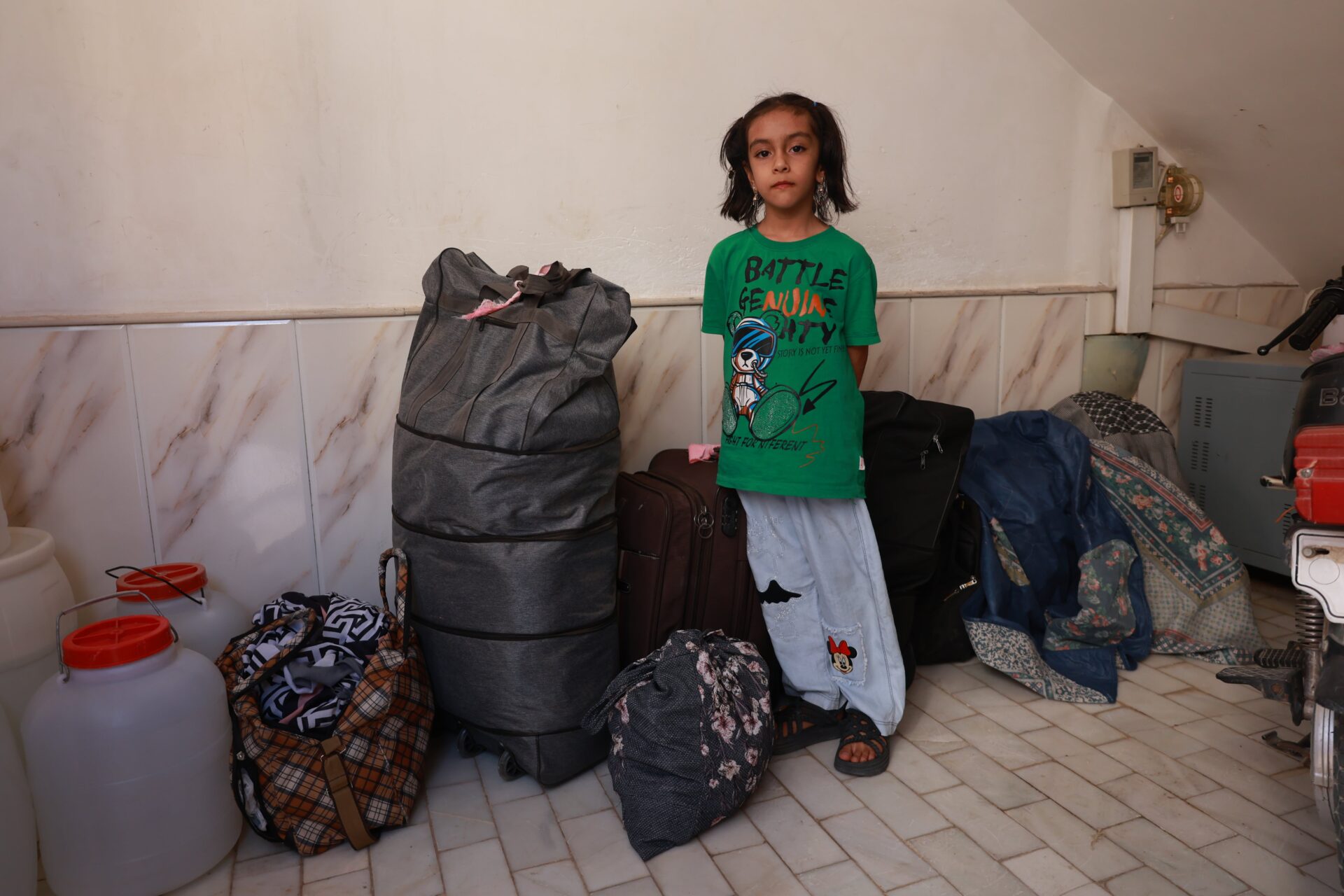
Faiza*, an Afghan returnee, was in primary school in Iran, but now stays at home

The impact of these restrictions is severe, especially for women who previously thrived in the informal sector — such as tailoring, weaving, food processing, and beauty salons. Many now face the bleak reality of being restricted to their homes. This setback not only hampers their potential but also erodes the progress made towards women’s economic empowerment.

Moreover, the plight of school-aged returnee girls is especially heartbreaking. As countless girls are denied their right to education, they join millions of others already stripped of this fundamental right. Without the opportunity to learn and grow, the future of an entire generation hangs in the balance, trapped in a cycle of darkness and despair.

The displacement crisis in Afghanistan is a silent storm, poised to evolve into a catastrophic situation if not urgently addressed. Donors must recognise the gravity of this humanitarian crisis and provide the necessary support for returning families to reintegrate seamlessly into their communities. By responding now, we can prevent further aggravation of the challenges facing these communities and foster hope for a better future.

Please help us to support people in need in Afghanistan and around the world. Donate now.

*Name changed to protect identity

BROWSE OTHER OPINIONS

Quick donate
arrow-up

Quick donate

Join Our Newsletter

We will always treat your personal information with the utmost care and will keep it private (read our privacy policy). You can opt out at any time by contacting us via email at IslamicReliefWorldwide@irworldwide.org or by clicking the unsubscribe button on one of the emails you receive from us.

© Copyright 2026 Islamic Relief Worldwide, Inc. All rights reserved. Registered Charity No. 328158
Zia Salik

Interim Director of Islamic Relief UK

Zia Salik was appointed Interim Director of Islamic Relief UK in 2025, and brings with him over 18 years of third sector experience. He has held several leadership roles within Islamic Relief UK, including National Events Coordinator, National Community Fundraising Manager, Head of Fundraising, and Deputy Director. Zia has led national fundraising strategies, managed large-scale campaigns and events, and contributed significantly to volunteer development, donor engagement and public outreach. 

As Interim Director, Zia oversees multiple teams and contributes to strategic planning, operational leadership and organisational growth. He is recognised for his expertise in major donor management, public speaking, media engagement and community fundraising. Zia has been instrumental in building strong community networks and delivering impactful campaigns.

Before joining Islamic Relief, Zia served as Programmes Manager at Humber All Nations Alliance, where he led organisational growth, project delivery and funding proposals.

Zia is a seasoned leader committed to social justice, who brings a collaborative, mission-driven approach to his work, helping to amplify voices and maximise impact in the charity sector.

Nadeem Malik

Interim CEO of Islamic Relief Worldwide (IRW) and Managing Director of Humanitarian Academy for Development (HAD)

Nadeem has a wealth of experience from the charity, statutory and private sectors. He is the Managing Director of HAD (a division of IRW) which is a centre of excellence seeking to empower the humanitarian sector and maximise its effectiveness and from October 2025 will serve as our interim CEO. 

Before joining Islamic Relief, for nearly a decade at the General Medical Council — a globally recognised professional regulator — Nadeem managed strategic relationships with Chief Medical Officers and senior leaders. Prior to that, he served as the UK Director of Islamic Help, engaging closely with many international non-governmental organisations and playing a key role in fundraising and media activities.

In 2000, Nadeem was admitted as a solicitor. He spent nearly 8 years as a Partner at a law firm specialising in employment, regulatory and charity law. He has published papers, including in the Modern Law Review, and chapters in books.

Nadeem is deeply committed to strengthening civil society organisations and the charity sector, and throughout his career has focused on improving foundations for future generations and building strong networks. Nadeem has particular expertise working in matters of Learning and Development, especially personal and professional development, combining Islamic principles with modern techniques and interventions. He is also especially interested in psychological perspectives and cognitive distortions. He has designed and delivered training to thousands of people for nearly 3 decades.

As well as individual development and growth, Nadeem has spent 20 years working with organisations to manage and lead people to improve outcomes and efficiencies. He is a Consultant Coach, qualified at ILM Level 5 in Effective Coaching and Mentoring and ILM Level 7 in Executive and Senior Leadership Coaching. He was Chair of the Independent Advisory Group for the Professional Standards Department of West Midlands Police for 4 years, where he was awarded recognition for his ‘Outstanding Work.’

Saqeb Mueen

Director of External Relations and Advocacy

Saqeb joined Islamic Relief in 2025, bringing with him extensive experience in strategic communications and policy engagement. He served for more than two decades at the Royal United Services Institute for Defence and Security Studies (RUSI), including eight years as Director of Communications, where he led high-impact media campaigns and worked with major international organisations including the European Union, NATO as well as national governments. Saqeb was also the first Head of Communications for Tech Against Terrorism, an online counter-terrorist organisation backed by the United Nations, where he developed and established its public relations capabilities. Saqeb has advised UK Muslim organisations on communications and public affairs as they foster interfaith initiatives and tackle racism and Islamophobia. Saqeb holds a BA in History from University College London and an MA in War Studies from King’s College London. He is a member of the Chartered Institute of Public Relations, is a fellow of the Royal Society of Arts and was a Senior Associate Fellow at RUSI.
Asha Ahmad

Director of People and Culture

Asha joined Islamic Relief in 2025 with the aim of working with colleagues to create an environment where everyone feels valued, empowered, and motivated to contribute meaningfully to our shared mission.

Asha has more than 20 years of experience in HR leadership across a range of industries, holding roles at Thomson Reuters, BMW, Movado Group and others. She is passionate about building strong, resilient teams and fostering positive workplace cultures where individuals are empowered to thrive, contribute and do their best work.

Asha holds a BA in Management, Economics and Law, as well as a BA in Business Studies. She is an Associate Member of the Chartered Institute of Personnel Development.

new director

Director of Network and Resource Development

Adnan joined Islamic Relief in 2004 as a regional fundraiser in the UK. He worked in multiple roles over 10 years at Islamic Relief UK, including setting up the first digital team and leading the growth of digital fundraising and engagement. Adnan also led numerous fundraising and marketing campaigns, which played a significant part in the growth of Islamic Relief UK.

Having moved to Islamic Relief Worldwide in 2014, Adnan has held different roles that have helped grow Islamic Relief’s global digital footprint into new geographic territories, supporting Islamic Relief members with their digital and marketing growth as well as developing new products and initiatives for the Islamic Relief family.

Adnan graduated in Industrial Design and Technology from Loughborough University. He has since completed an Advanced Diploma in Business Administration from Durham University and a Diploma in Digital Marketing from the Institute of Data and Marketing.

Nadeem Azhar

General Counsel

Nadeem joined Islamic Relief Worldwide in September 2022. He has worked in the charitable sector for over a decade.

He studied Modern History and Politics at Manchester University, and at the University of Law in London before qualifying as a solicitor in 2011.

Nadeem is an experienced corporate, commercial and governance lawyer, having worked with various faith-based and grant making charities as well those in health and education settings. He was a partner at a law firm in London before moving in-house where he focused on setting up and restructuring charities and social enterprises.

Most recently, Nadeem was Lead Counsel at Mind, a leading mental health charity, where he co-authored a new federation agreement, revamped legal processes, and played a major role in developing its strategic and fundraising partnerships.

Nadeem has been a charity trustee for the Seafarers Charity, as well as many grant-making bodies and theatre companies.

Salaheddin Aboulgasem

Interim Director of Global Family Development

Salaheddin joined Islamic Relief UK in 2006 and over the next 7 years held multiple roles, including Community Fundraiser and Campaigns Manager, before joining Islamic Relief Worldwide in 2013.

Since then, Salaheddin has been instrumental in the launch and growth of new Islamic Relief member offices in Ireland, Spain, Norway and Finland, as well as providing essential support and guidance to existing members, including Italy, where he served as CEO for 3 years.

In 2023, Salaheddin became Deputy Director of Global Family Development and in this role has continued to play a crucial part in steering Islamic Relief’s growth and expansion. He has also led global fundraising and media engagement for major emergencies including the Türkiye-Syria earthquake and Libya floods. Salaheddin became the Interim Director of Global Family Development in 2025.

Salaheddin holds a master’s degree in International Development and is actively involved in several community-led initiatives. He is currently the Vice President of the International Union of Muslim Scouts and Deputy Chair of the UK Muslim Scouts Fellowship as well as Chair of the South Birmingham Muslim Community Association.

Board of Directors
Javed Akhtar

Director of Finance

Javed Akhtar has more than a decade of experience at Islamic Relief, having worked in a similar role between 2003-2014. In that role he strove to implement wide-ranging financial and accounting processes which aided in the transparent nature in which Islamic Relief now operates.

Javed also has diverse experience across the private sector, having worked at American chemicals and pharmaceutical giant DuPont, shipping firm FedEX and technology consultancy company Accenture. In all his roles, he prioritises using the latest technologies to improve monitoring and reporting at every level. Javed’s commitment to embracing digital end-to-end technology, enhancing accountability to our stakeholders and promoting financial transparency is ensuring that we remain at the forefront of financial developments in the sector.

By training, Javed is a chartered accountant with a Master’s degree in NGO Management with Charity Accounting and Financial Management from Cass Business School.
Board of Directors
Affan Cheema  

Director of International Programmes

Affan Cheema is an experienced leader who has spent 25 years working in the international aid sector on poverty eradication in Asia, Africa and the Middle East. He has worked in fast onset emergencies, protracted crisis and development environments whilst working for Islamic Relief Worldwide and Care International. He is also a trustee of South West International Development Network (SWIDN).

Through his career Affan has held numerous roles including institutional fundraising, programme and grant management, and programme quality assurance.  Affan’s leadership has helped Islamic Relief Worldwide secure the highly coveted Core Humanitarian Standard (CHS), seen as the sector’s premier benchmark for operational excellence.

Affan completed his BA in Economics and Geography from University of London (School of Oriental and African Studies) and his MSc in Development Administration and Planning from the University of Bristol. He is PRINCE2 qualified, is a keen sportsman and recently co-edited a book entitled -Islam and International Development: Insights for working with Muslim Communities-.
Board of Directors
Dr Hossam Said

Managing Director, Humanitarian Academy for Development (HAD)

For nearly three decades Dr Hossam has provided the strategic vision to manage, lead and develop a range of international humanitarian interventions around the world.

At the start of his career, Dr Hossam served on the Board of Directors of the Egyptian Medical Syndicate, before moving to Islamic Relief Worldwide to manage the core global business activities as International Programmes Director.

During this time the organisation increased its global reach, gaining both domestic and international repute and credibility. Dr Hossam has also served on the Islamic Relief Worldwide Board of Management and Executive Committee for the past 15 years; sharing responsibility for strategic organisational development and the change management process, whilst forging strong relationships with many other charities.

Dr Hossam gained an MBA from Aston Business School in 2004 and graduated as a Medical Doctor from Cairo University in 1981.
Board of Directors
Martin Cottingham  

Director of External Relations and Advocacy

Martin Cottingham joined Islamic Relief in 2012 as IRUK Media Relations Manager, and was appointed Head of Communications in 2015 before taking up his current position as Director of External Relations and Advocacy for Islamic Relief Worldwide.

Martin has helped Islamic Relief to increase its mainstream media profile and expand its campaigning work, producing hard-hitting advocacy reports on floods in Pakistan (2011) famine in Somalia (2012) disaster risk reduction (2013) and aid to Afghanistan (2014). He has over 20 years’ experience working in media, communications and marketing roles for international development and environmental charities.

Martin graduated from the University of London with a degree in English and Drama (1982-85) then trained as a journalist with a postgraduate diploma at City University (1986-87). He has previously worked for Christian Aid as Editor of Christian Aid News and Media Relations Manager (1988-97) for Oxfam as Regional Campaigns Manager (1997-2000) and at the Soil Association as Marketing Director (2001-2006), as well as working for a wide range of organisations as a freelance writer, researcher and communications consultant.

Tufail Hussain

Director of Islamic Relief UK

Tufail Hussain has 17 years’ experience in the humanitarian and development sector, leading on marketing and fundraising campaigns for several organisations before joining Islamic Relief UK in 2016 as Deputy Director. Tufail was appointed Director of Islamic Relief UK in 2019 and in 2021 provided valuable leadership as interim CEO of Islamic Relief Worldwide.

Tufail is driven by a passion for empowering disadvantaged youth and mentors a number of young people. He also works to strengthen engagement between British Muslims and wider society. Under his leadership, Islamic Relief UK has significantly increased its income and developed successful partnerships with communities across the country. He has travelled around the world to raise awareness of major emergencies such as the Syria, Yemen and Afghanistan crises and the floods in Pakistan and Sudan.

A father to 5 daughters and a son, Tufail is also a sports enthusiast and passionate Liverpool FC supporter. Tufail has run the London Marathon twice, raising over £35,000 for humanitarian causes.

Before joining Islamic Relief he was CEO of Orphans in Need, where he oversaw a new strategy that increased income from £2 million to £9 million in 3 years and opened up new UK and international offices. Tufail is also a trustee of the Muslim Charities Forum and a Director of TIC International (Islamic Relief Worldwide’s clothes recycling and trading arm).
Waseem Ahmad

Chief Executive Officer

Waseem Ahmad joined the Islamic Relief family over 24 years ago, serving as Programme Officer in the Balochistan province of south-western Pakistan before becoming Head of Programmes in Pakistan. Waseem then moved to Oxfam and Tearfund before returning to Islamic Relief to establish our mission in Malawi. Later serving as Head of Programme Funding and Partnerships, Waseem led the response to major crises across the globe, including the East Africa drought, Pakistan earthquake and the Indian Ocean Tsunami.

Waseem then served for nearly 6 years as our Director of International Programmes, during which time the charity secured and retained the coveted Core Humanitarian Standard certification in recognition of the quality of our programming. He was appointed CEO of Islamic Relief in May 2021.

With a special interest in community mobilisation and infrastructure, Waseem received an MSc in Project Planning and Management from the University of Bradford, as well as an MSc in Economics from Arid Agriculture University in Rawalpindi, Pakistan.

Waseem has also worked for Lepra Health in Action and is a member of the International Civil Society Centre’s Board of Trustees. The father-of-3 enjoys walking and playing football, and is a keen birdwatcher.