Every year, Islamic Relief’s Winterisation Programme helps vulnerable people around the world to keep safe and warm during the coldest months.
Last winter, we reached more than 89,900 people in 19 countries and territories with vital aid, including warm clothes and blankets, firewood and food parcels. Cash support is becoming an increasingly important part of our winter distributions as it enables families to buy what they most need.
In Gaza, distributing aid remains extremely challenging. Despite everything, our staff and partners are delivering daily aid and constantly reviewing processes and conditions on the ground to ensure your donations can reach people in need both safely and reliably.
Here, we explain how winter heaps extra pressure on Palestinians already experiencing danger and extreme hardship in Gaza, and how you can help through Islamic Relief.
Why does winter make life harder for families in Gaza?
Nearly everyone in Gaza is displaced. Many people are living in tents, crowded shelters or makeshift shelters on the enclave’s streets and beaches.
Despite the announcement of a ceasefire, families are grappling with ongoing attacks, shortages of essential items, and profound uncertainty around almost every aspect of daily life.
Winter brings added hardship as temperatures in Gaza can fall as low as 6 degrees centigrade at night, though wind and heavy rain can make it feel even colder. Flooding at this time of year can submerge tents with water and raw sewage. The winter months leave families cold, wet and at even greater risk of illness.
Israel continues to tightly restrict what can enter Gaza, resulting in massive quantities of aid being unable to reach those most in need and worsening the humanitarian situation as winter approaches.
Families are living in torn tents which cannot be replaced as more durable shelter materials are restricted. Gaza’s electricity supply has been cut off, leaving people reliant on generators – but there are severe fuel shortages, making it hard to heat homes or keep vital services such as healthcare running. The price of engine oil for generators has rocketed to $900 per litre.
How will Islamic Relief support people in Gaza this winter?
To help vulnerable families prepare for and cope with the winter season, Islamic Relief will provide one-time unconditional cash assistance to displaced people in shelters across Gaza.
They can use this cash to buy whatever they need most to get them through winter – things like warm clothes, heating materials like firewood and gas, and food parcels or medical bills.
Why is Islamic Relief providing cash?
Cash support is an effective, fast and dignified means of assisting vulnerable people. It allows them to choose the goods and services they need most; supporting their dignity while also promoting local economies. In Gaza, where the availability and price of items fluctuates daily, this flexibility is vital.
This also provides vital liquidity at a time when the crisis has destroyed people’s livelihoods and most people no longer have a reliable source of income – even when items are available in markets, many families do not have the cash to buy them.
We provide cash throughout our winterisation and other seasonal programmes, including our global Ramadan and qurbani distributions, in many countries around the world, but it can be particularly important in crisis contexts where markets and humanitarian access are disrupted.
How does it work?
We use an electronic payment system to distribute cash to the digital wallets of people in need in Gaza. These wallets work similarly to a mobile banking app. Instead of receiving physical cash through a distribution event, people we support receive the approved amount directly into their wallet and are notified once the funds have arrived. This process makes it safer for the vulnerable people receiving it, and means we can ensure the cash goes where it is intended.
The cash in the digital wallet can then be redeemed to buy goods at a wide range of local shops and businesses.
Do people need smartphones to receive the cash?
Many families in Gaza do not have smartphones or reliable access to electricity. Our cash assistance mechanism has been designed to operate in challenging humanitarian contexts, so people can access digital wallets without smartphones via simple SMS.
This payment system is already widely used by United Nations (UN) agencies and humanitarian organisations operating in Gaza and other emergency settings because it provides a secure, efficient, and accessible way to deliver assistance while reducing the risks associated with physical cash distributions.
How do you decide who receives aid?
Everywhere we work, including Gaza, we always prioritise the most vulnerable people. This includes the poorest families and marginalised or otherwise underserved groups such as older people, people with disabilities, widowed mothers, orphaned children and displaced people.
We are part of the UN cluster system, which ensures coordination between humanitarian organisations and helps identify people who are most in need. In Gaza, where effectively the whole population is in desperate need of support, we work with this system and our partners to identify shelters and communities we anticipate being worst affected by winter’s conditions. Within these, we’ll carry out assessments to ensure we provide support in the most effective and impactful way.
What are the challenges of delivering aid in Gaza right now?
Despite the terrible suffering, Israel’s blockade remains in place, which continues to severely restrict aid, people, and goods from entering or leaving Gaza. This includes even basic essentials such as some medicines and shelter materials and prevents sick patients leaving for vital treatment. The restrictions on fuel also cause huge challenges for hospitals, water and sanitation systems, and humanitarian operations. Israel’s ‘dual-use’ list means that almost anything can be denied entry – sometimes this includes paper and pencils needed for schoolchildren and items needed for any kind of large-scale recovery and reconstruction. Tight restrictions have also been imposed on cash entering Gaza, creating a liquidity crisis which, along with the collapse of Gaza’s banking sector, is impacting humanitarian delivery.
The Israeli military has also expanded its full control of territory inside Gaza, restricting humanitarian work in many areas. Persistent violations of the ceasefire hamper relief efforts as attacks against civilians continue and humanitarian workers face daily risks in an unpredictable security landscape. Almost 600 aid workers have been killed by Israel’s assault on Gaza since October 2023, making it the most dangerous place in the world to deliver aid.
Recent Israeli legislation limiting the registration of international non-governmental organisations is also severely impeding the humanitarian response.
How is Islamic Relief navigating this situation?
Islamic Relief staff and partners in Gaza are doing everything they can to keep delivering aid in extremely difficult and dangerous conditions. Our staff and partners are facing the same challenges as the communities we serve – they are also displaced, grieving and trying to feed their families. Every day, our team adapts its plans and activities depending on the latest security developments and what is available in the markets.
Despite the huge challenges, throughout this crisis they have continued to find a way to deliver vital aid.
What happens if plans for the Winter Programme have to change?
Our plan to provide cash payments is based on the current security situation, humanitarian context, and operating environment in Gaza – all of which remain highly dynamic and unpredictable.
If the security situation, access, population movements, market conditions, or other operational factors change significantly in the coming months, we may need to adjust how assistance is delivered.
Our staff and partners will continue to closely monitor the situation and make any necessary adjustments to ensure assistance is delivered safely and effectively, while prioritising the wellbeing of affected communities, staff and partners.
Beyond winter support, what is Islamic Relief doing to help Palestinians in Gaza?
Islamic Relief is working with other local and international non-governmental organisations (NGOs) to support people in desperate need in Gaza.
One key project is providing healthcare for pregnant women, new mothers and their babies. The women, many of whom are displaced, are receiving antenatal care services, vitamins and medicine.
We are also supporting eight temporary learning centres for displaced children who have missed years of school. We are rehabilitating and equipping centres, training teachers, and providing psychosocial support for traumatised children. Hundreds of primary and kindergarten-age children attend classes in a range of different subjects.
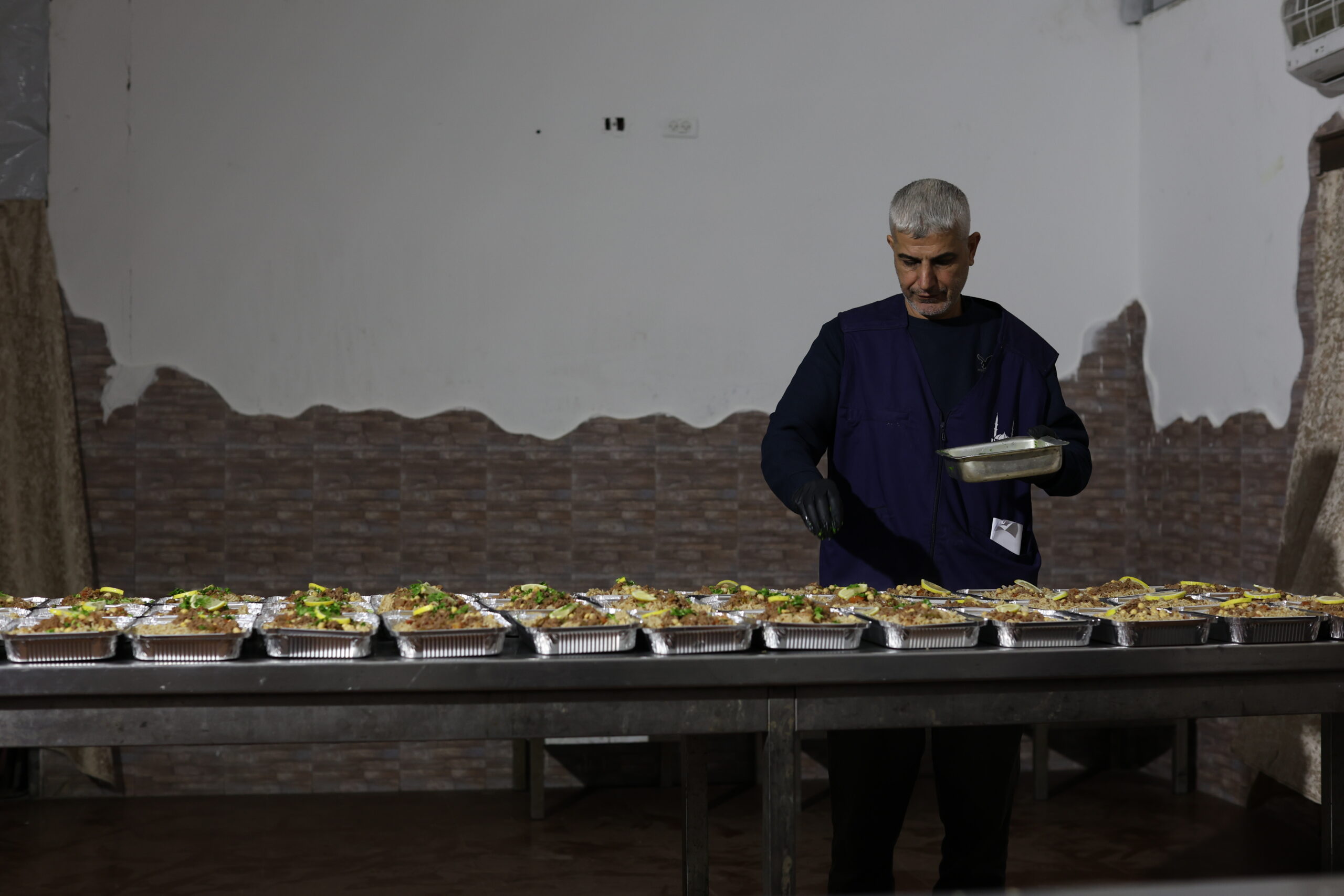
Your donations are helping families manage a crippling food crisis, making it possible for us to provide hot meals to displaced people and distribute canned meat.
We are also supporting over 25,000 orphaned children and their carers though regular sponsorship payments that enable them to pay for essentials such as food, shelter materials and healthcare.
Islamic Relief has been delivering aid in Gaza throughout this crisis and has been supporting Palestinians in need since 1997. We also continue to advocate for a fair future for Palestinians, and for an end to Israel’s illegal occupation which drives poverty and injustice and strips people of their dignity and fundamental human rights.
How can I help Gaza?
Please donate to our Palestine Emergency Appeal today. Despite huge challenges, through Islamic Relief your donations are still a lifeline for people in desperate need.
Editor’s note: The main image on this article is from December 2025 and shows hot meals being prepared for distribution in Gaza.