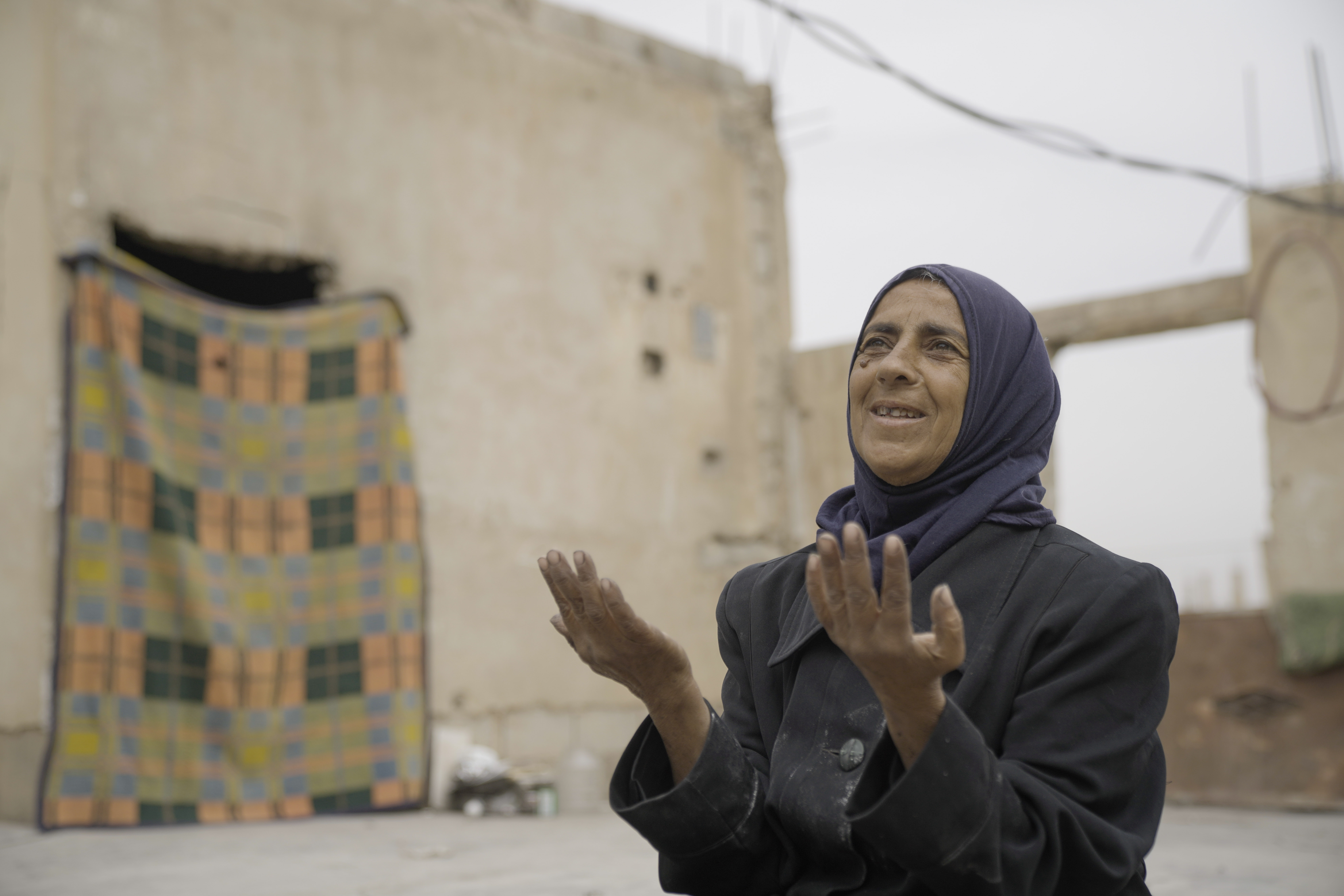
Syria entered a new era in 2025, but more than 14 years of crisis has left the country suffering through one of the biggest displacement disasters in the world.
According to UN reports, more than 900,000 refugees and some 1.9 million internally displaced people have returned to their home areas since December 2024. Many have returned to find their houses reduced to rubble and are forced to contend with critical food shortages and a lack of jobs.
Nearly 15 million people –more than half of Syria’s population – are in need of some form of humanitarian support.
“We lost everything”
Umm Issa lost her home and her husband during the crisis in Syria. With the change of regime in December 2024, Umm Issa and her 2 children were finally able to return home years after being displaced, only to find nothing left.
“We returned to our village after the liberation, but our house was destroyed. We have no choice but to live in another house, which is in very bad condition – no windows, no doors, no electricity, and no water,” Umm Issa tells Islamic Relief.
“We used to live a decent life in our homes, but after being displaced, we lost everything. We can barely afford to buy food. We live on aid and make ends meet with what people give us.”
Umm Issa works collecting waste from landfills to provide for her children, but the meagre salary she receives is barely enough to sustain the family.
“I have no stable source of income. Since my husband passed away, I have been struggling to provide for my two children.
“We rely on humanitarian aid and the generosity of charitable people who sometimes provide us with food. There are days when we have very little to eat, and securing basic necessities remains a daily challenge.”
A lifeline during the holy month
Last year, Islamic Relief’s Ramadan food distribution reached more than 38,000 people across Syria, including Umm Issa and her children. They received essential items including rice, sugar, cooking oil and lentils.
“The food distribution by Islamic Relief makes a huge difference during Ramadan. It helps struggling families secure enough for iftar and suhoor, easing the burden of worrying about food,” Umm Issa says.
“When we receive a food parcel, we feel some relief, and it brings joy to our children. In these difficult times, such aid gives us hope and reminds us that someone cares.”
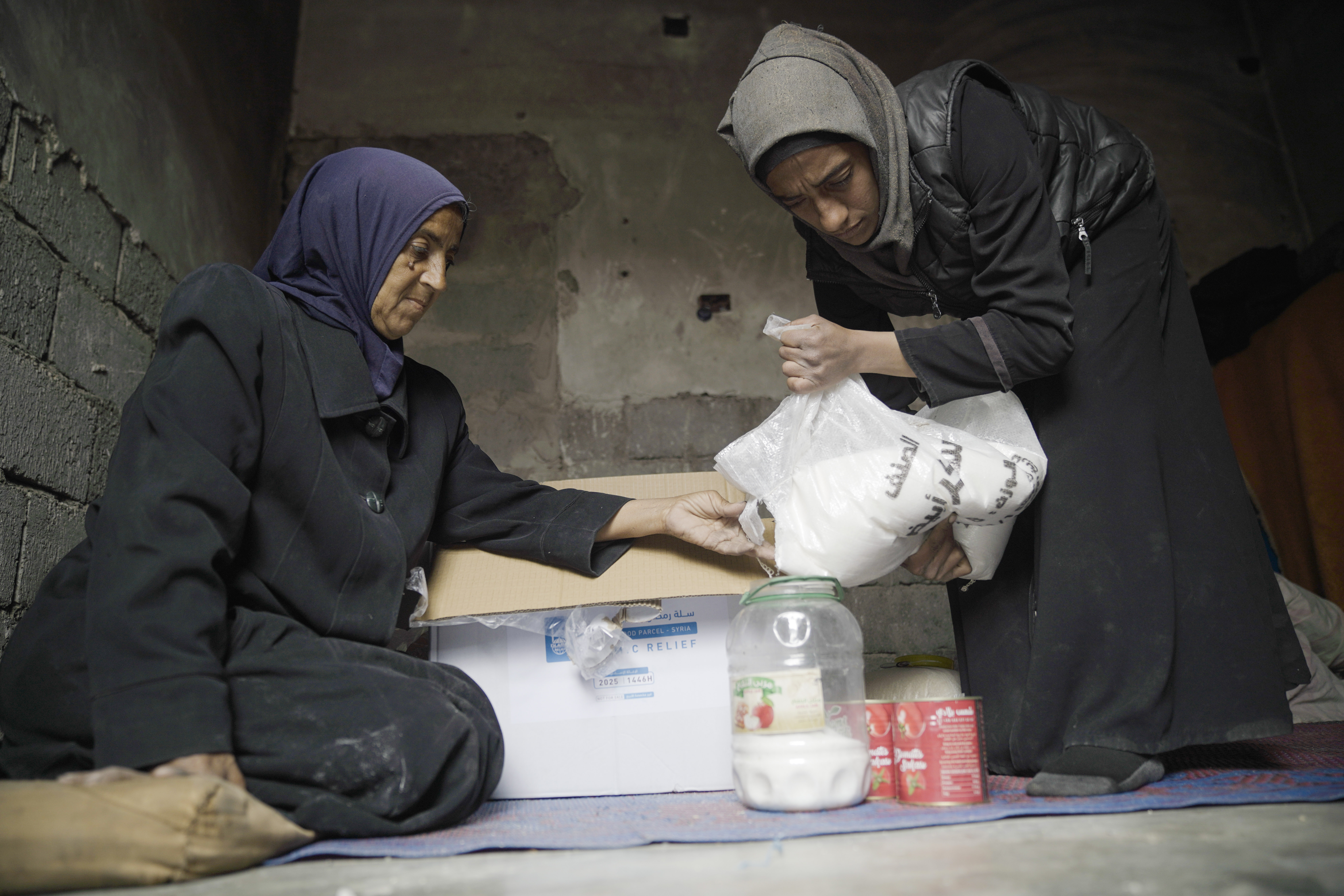
While the food packs act as a lifeline for Umm Issa and her children, they miss how Ramadan used to be before they were displaced.
“After displacement, Ramadan became difficult. Instead of being a month of comfort and joy, it turned into a month of hardship and struggle. Sometimes, we didn’t even have food for suhoor or iftar.
“Yet, despite all these challenges, Ramadan remains dear to my heart because it is a month of patience and prayer, where we feel closer to God. No matter how tough the circumstances are, we fast, we pray for relief, and we always say, ‘Alhamdulillah for everything.’”
This year at least, Umma Issa and her 2 children will have food to eat.
Help us reach more families in Syria and beyond, by donating generously in the blessed month of Ramadan.