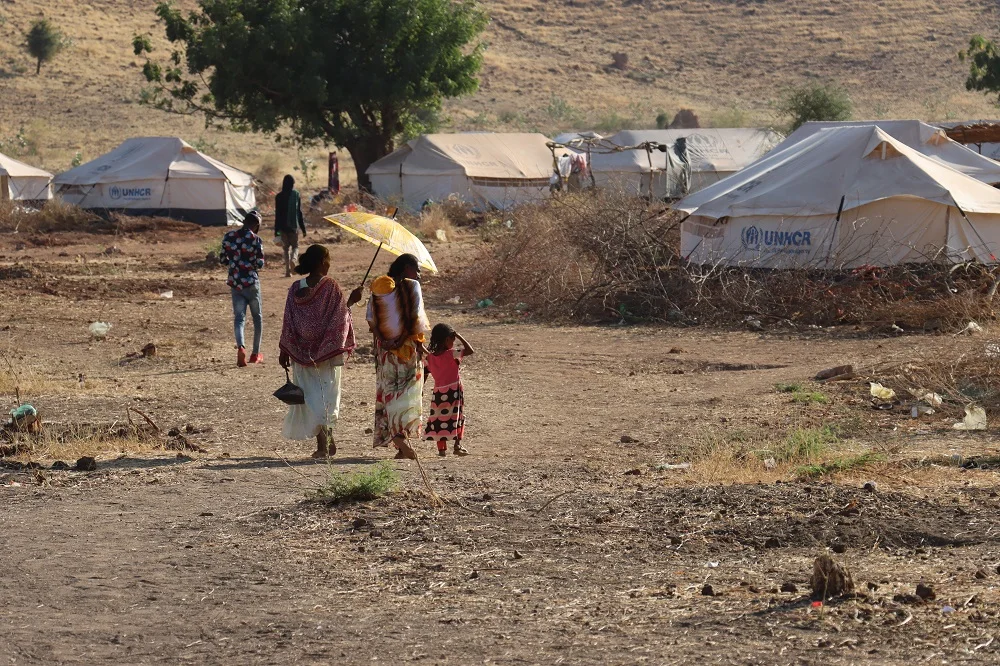
Asia* is a 17-year-old orphan living in a camp for internally displaced people in Central Darfur State, Sudan. She fled the violence of conflict in her hometown as a younger child only to experience violence far worse.
Betrayal of trust
“I was alone in our shelter, and my neighbour talked me into letting him in. I needed money for my school fees, and he promised he would help me,” says Asia, recalling the day a 27-year-old man sexually assaulted her.
The schoolgirl was bleeding heavily and unable to walk when her grandmother found her. “I did not understand what happened to me; I only knew it was something terrible. I was scared, ashamed, and in pain.
“My grandmother asked me to bathe and have a hot drink. She did not know what happened; I did not know how to tell her,” explains Asia.
“Shortly after that, I was with my grandmother at the farm riding on a donkey. I fell from the donkey and started to bleed profusely. My grandmother and brother rushed me to the hospital, and the doctors gave me blood; I was nearly dead.
“That was when I found out I had a miscarriage, before I knew I was pregnant!”
Asia stares blankly at the ground as she continues, “My grandmother started crying hysterically, she had realised what happened to me. She consoled me and told me that this happens to a lot of girls and that it was not my fault.
“I was very sad about what happened to me, and I was even sadder after losing the baby. I spent 4 days in the hospital before the doctors discharged me. They gave me painkillers and antibiotics,” says Asia, who pauses before talking about the man who abused her.
“I thought he loved me; he promised he would marry me; I trusted him. I remember what he had done to me all the time.”
Mental health and psychosocial support
Islamic Relief provided Asia with counselling, through one of our sexual and gender-based violence (SGBV) recovery centres in Central Darfur’s rural hospitals. The centres provide vital psychological and medical care to survivors.
“When I was at the hospital, 2 people approached my crying grandmother and asked her what happened. They came to me and introduced themselves as psychologists with Islamic Relief’s Health Centre,” says Asia.
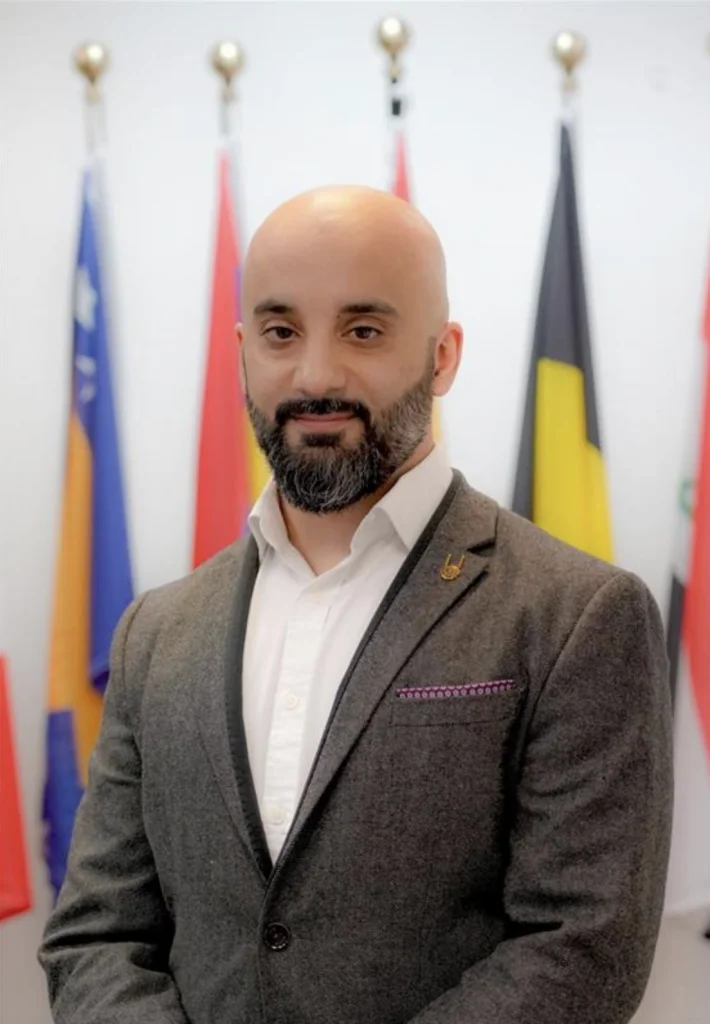
Saddam Yahya, Asia’a psychologist, says, “My colleague and I immediately approached the survivor when we learned of the abuse. I asked my colleague, who is a woman, to step in first to make her feel safe. To my surprise, Asia had asked to speak to me. She wasn’t speaking with anyone else, not even to her doctors.”
He continues, “She started to describe the abuse, she was responsive to all my questions. I opened a Case Management file for her and conducted a preliminary evaluation. I found her to be traumatised and depressed.”
“I prescribed 7 therapy sessions for her. She came to the centre for the first 2 sessions but then she feared people would notice her coming here, so I volunteered to visit her at home for the rest of the sessions,” the psychologist says.
Resilient, courageous and ambitious
For Asia, the support has been a lifeline.
“The therapy sessions have helped me through my ordeal. The first thing I told my psychologist is that I do not want to quit school, but I cannot afford the fees. A week later, he came with his colleagues from the organisation, and they provided me with cash and school supplies.
“I couldn’t help but think if I had the money for the school fees, this horrible thing wouldn’t have happened to me!” says Asia as she fights back tears.
“My psychologist encouraged me to go to school and have a normal life. My favourite subject is science. I dream to become a doctor one day to help people.”
Saddam adds that, “Asia is very vulnerable; she is a girl child who is living in poverty and she is an internally displaced person, too. She was only 16 years old at the time. It took more effort to treat her trauma.
“She had to experience the loss of 2 parents, which added to her vulnerability. Through all this hardship, Asia was resilient, courageous, and ambitious. She persisted in going to school and got third place in the final year examination.”
Sexual and gender-based violence (SGBV) awareness
“I had a phobia of my home because I was assaulted in it, and I also feared the social stigma. I overcame these fears and I am now more aware of my rights. I learned through the sessions that what happened to me was wrong and the abuser should be punished.
“I also learned how to report abuse either to the police, the hospital, or civil organisations. If this ever happens to one of my friends, I will never leave her alone and I will help her report it,” says Asia.
Islamic Relief has also trained health workers, community and religious leaders, and key women and youth groups on SGBV awareness and child protection.
Integrated intervention
Central Darfur State experienced a prolonged period of conflict that uprooted thousands of people. Islamic Relief’s recovery centres are part of an integrated intervention serving over 52,200 conflict-affected people with primary health care services. Islamic Relief also supports nutrition centres treating acute malnutrition in children under 5.
Asia says, “I am thankful for the support I received, without it, I would have deteriorated. I have come a long way.”
Support our efforts to protect women and girls from gender-based violence and provide health services to them. Donate now.
*Name has been changed to protect identity.