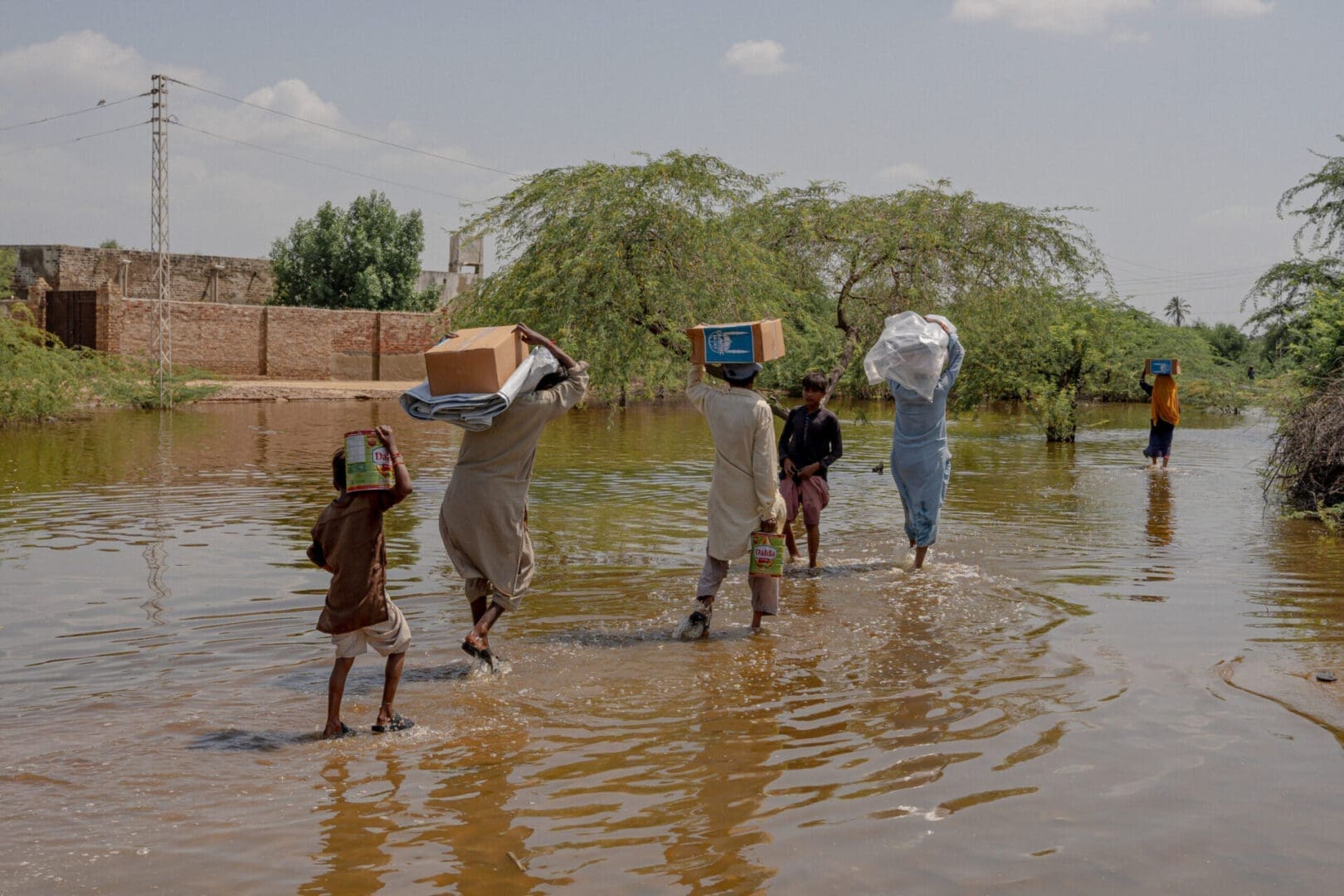
New assessment finds three quarters of people still do not have safe drinking water as diseases rise
As the UN launches a new $816 million funding appeal to help Pakistan recover from the devastating floods, Islamic Relief is urging international donors to give generously and ensure that funds reach affected communities quickly. The needs on the ground remain enormous and millions of people need sustained support to rebuild their lives and livelihoods.
A series of new Islamic Relief assessments carried out last week in Sindh, Balochistan and Khyber Pakhtunkhwa (KP) show that 73% of people still do not have access to clean drinking water. In some areas 80% of water sources have been contaminated. Tens of thousands of people are now affected by water-borne diseases including diarrhoea, malaria, typhoid, acute respiratory infections and skin and eye infections. More than 2,000 health facilities have been damaged and shortages of clean water and soap mean that just 27% of people are able to wash themselves thoroughly. Areas that are still under water are seeing a rise in dengue fever. Women and girls are especially at risk, as the lack of sanitation facilities means they don’t have privacy or safe places and they are at increasing risk of harassment and abuse.
The assessments found that poverty is increasing – in some areas almost half of people surveyed have lost their jobs since the floods. 74% of farmers’ vegetable crops have been damaged and small businesses are struggling to recover because of the damage to roads and bridges which is restricting access to markets.
Massive reconstruction is needed across the country after billions of dollars’ worth of damage to houses, farms, schools, roads, hospitals, water networks, sanitation systems and other vital infrastructure.
Islamic Relief has now reached more than 400,000 people across the country with aid including clean drinking water, constructing new latrines, hygiene kits and handwashing stations – as well as supporting people with shelter, food, cash and education. The charity has raised more than £16 million for its response, most of it from the general public around the world who have shown incredible generosity.
Asif Sherazi, Islamic Relief’s Country Director in Pakistan, says:
“International attention is fading away but families are still living in the open and winter is fast approaching, when the bitter cold will bring new suffering for many families. The international response so far has helped save lives but the needs on the ground are far bigger than anything we have seen before. International donors need to show greater urgency and make sure that the funds reach organisations who are on the frontlines of the response, including local Pakistani organisations.”
Islamic Relief is also calling on the world to go beyond emergency aid and commit to addressing the injustice of climate change by setting up a global finance facility to address Loss and Damage and granting debt relief to Pakistan – through an interest-free moratorium, write-off or debt swap – to allow the country to focus its resources on vital repairs and rebuilding.