The Bosnian War of the 1990s is still inflicting a terrible toll on the people of Bosnia and Herzegovina. An estimated 20,000-50,000 women were raped during the war, and decades later continue to await justice. Many still struggle with serious mental and physical illness, which can leave them unable to provide for themselves or their families and trapped in poverty. Islamic Relief works with mental health professionals to support healing.
It has been almost 3 decades since the end of the war which killed more than 200,000 people and uprooted more than half of Bosnia’s 4.2 million citizens. Since then, very little has been done to address the psychological trauma of war.
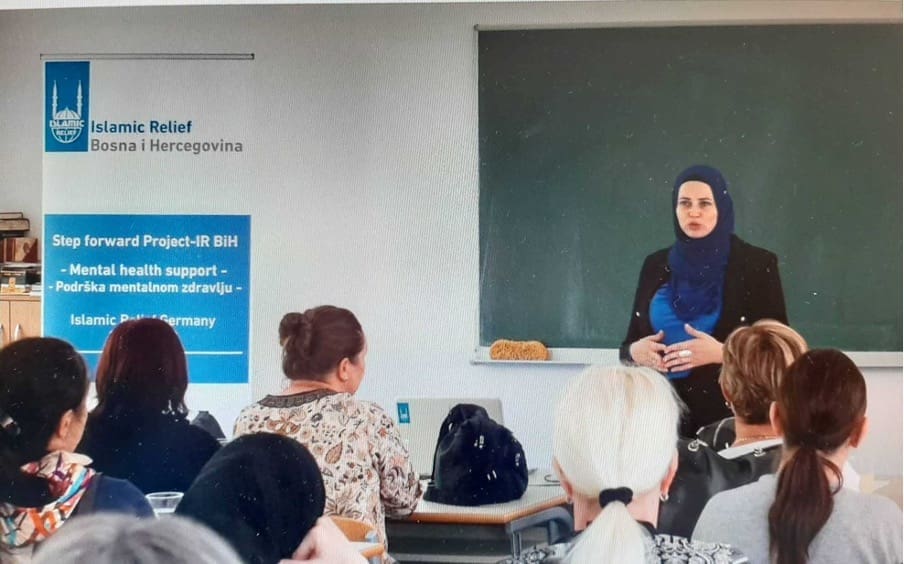
Larisa Bajric, psychotherapist and project coordinator of Step Forward, a 2-year mental health project by Islamic Relief Bosnia, sees the complexity reflected in her daily practice. Such trauma, she says, would have been easier to treat just after the war. But many of the women she works with in Tulza Canton were young, often teenagers, when they were sexually abused. They have grown and started families all while feeling ashamed – a feeling that is often kept alive by communities which frown upon people speaking openly about the traumas caused by the war.
Talking about any form of gender-based violence is seen as taboo, and so many people find it hard to seek mental health support. Talking about sexual assault is regarded as too painful to be brought up in a society that is still trying to heal from the war.
The women and children that Larisa works with encounter a lot of misunderstandings in their immediate home environments, as she explains, “There is an educational barrier that I see with mothers of orphans who live in rural areas who don’t see the abuse they go through as something detrimental, but rather a part of their life. Often, these women are blamed for provoking the abuse, making it all the more difficult for them to come forward.”
A traumatised country
Women often don’t know how to share these traumatic events with their husbands, and the men, in turn, don’t know how to deal with them and often blame the women or themselves. Perhaps unsurprisingly, domestic violence is prevalent, and trauma is passing from generation to generation.
“There is a general lack of knowledge about violence in Bosnia, especially when it comes to psychological violence. A lot of the communities I work with are suffering with transgenerational trauma”, says Larisa, who believes trauma is transmitted through oral storytelling. This is very noticeable in Bosnian society, where there is not enough education or understanding of mental illnesses or mental health in general.
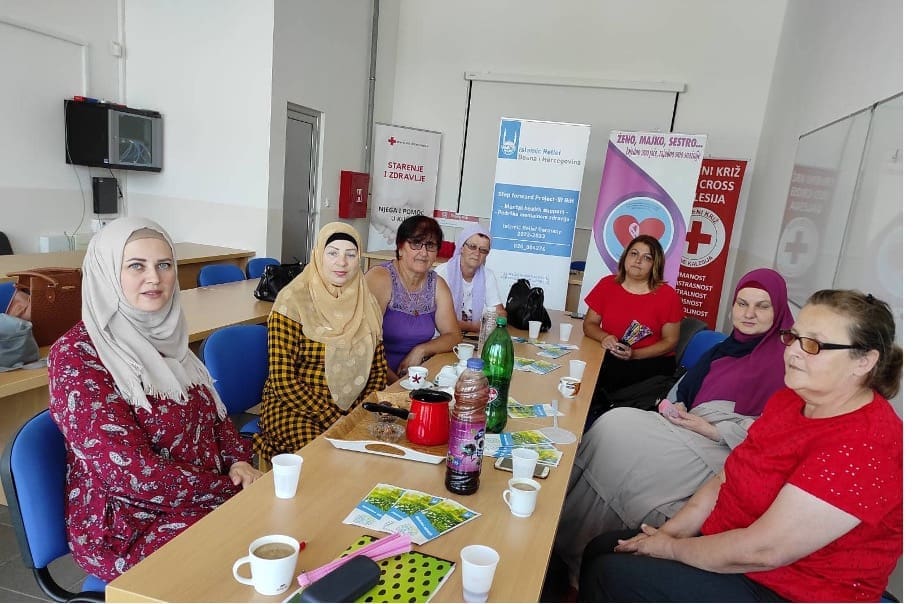
Larisa, far left, with her therapy group at the Islamic Relief office in Tulza
The importance of mental health
Larisa works closely with Islamic Relief Bosnia to promote the benefits of psychotherapy through mental health projects specifically targeted for vulnerable and disadvantaged communities. She helps women and children identify and change the behaviour patterns that disrupt their relationships with people. Her group therapy sessions also help people to improve their ways of handling problems, develop social interactions and develop self-confidence.
“There is a girl in therapy that I am working with, she is 20 years old, and is diagnosed with hebephrenic schizophrenia. She was sitting at home, terrified of going outside alone. Her mother abused her mentally and physically while she was growing up, and now her aunt is taking care of her and helping her to recover as much as possible. The mother was projecting a lot of her own issues and traumas onto her own daughter, who was forced to take medication due to her debilitating condition.
“After I started working with her, she was able to reduce the medication that she relied on for so long, and eliminate some of them completely. Then she joined 2 associations that help people with similar diagnoses get socialised. She started coming to therapy alone by public transportation. After only 3 months of therapy she started feeling better, and her doctor was surprised at how quickly she has improved.”
Breaking the cycle
Bosnian society today is shaped by the war, as Larisa explains. For her, every trauma is an individual case, but millions of individual cases make up a society. Breaking out of the cycle of silence and frustration is the hardest part, according to Larisa, who explains, “Working with young people is easier as they are more open to new methods, and not stuck in their ways unlike the older generations who I also work with. Developing children’s self-confidence and nurturing their abilities is important in processing their trauma. This will lead to healthier adults that will break the generational trauma.”
Difficult as it is, Islamic Relief Bosnia and Larisa hope to foster dialogue and create activities, workshops and safe spaces for vulnerable families through their mental health programmes.
“The way I see it is that if the head is sick the rest of the body will follow quickly, and that is the same with the families I work with. I want to make sure that mental health becomes part of Bosnian society and working with Islamic Relief to raise awareness of its importance is crucial to me.”
Islamic Relief has been a lifeline for those affected by the Bosnian War. With your help, we can continue to help vulnerable people change their lives – and their futures – for the better. Donate now.