One of the most pressing issues facing adolescent girls in rural Bangladesh issues is menstrual hygiene management. Islamic Relief has introduced a unique and sustainable intervention to assist girls in some of the most underserved areas of Dinajpur.
Many girls in remote areas find themselves distressed when menstruation begins unexpectedly during school hours. With no access to sanitary products, many leave school early or stay at home altogether. This disrupts their education, compromises their health, and diminishes their self-esteem.
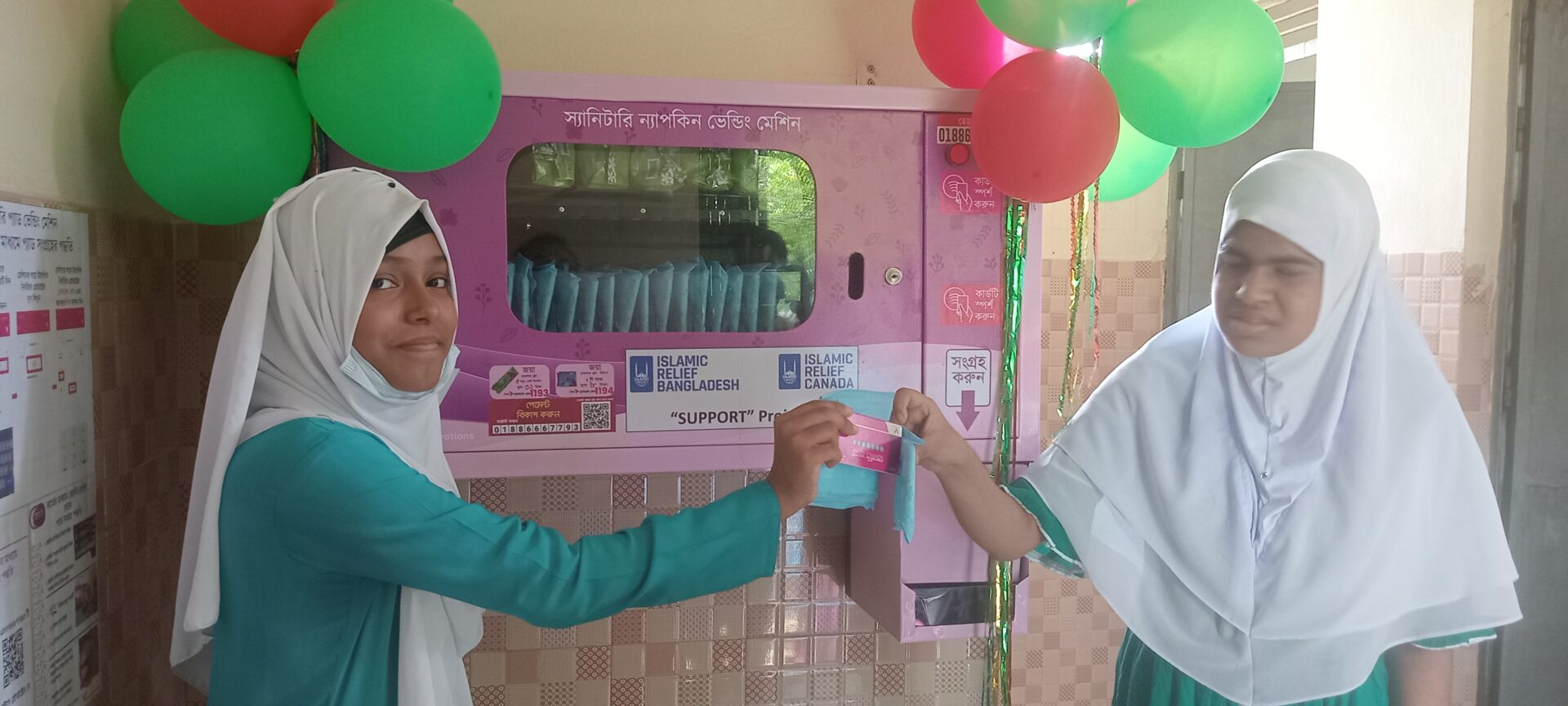
Through our Sustainable Livelihoods Development of the Extreme Poor Communities (SUPPORT) project, we installed sanitary napkin vending machines in 5 schools.
The schools were selected based on essential criteria to ensure maximum impact: girls-only institutions with a significant student population, structural feasibility for installation, geographical isolation, and active interest from school management.
Class 10 student Maliha said, “This machine has changed everything for us. We used to feel ashamed and anxious when our periods began unexpectedly. Now we can manage those moments with dignity. Thank you to everyone who made this happen.”
Technology-driven monitoring and accountability
The machines were installed by certified vendors and are maintained by Islamic Relief. Islamic Relief staff collect also monthly data to assess effectiveness and promptly address any operational issues, offering technical and programme-related support when needed.
Each vending machine is digitally connected to a central dashboard, allowing both the vendor and project team to remotely monitor usage, refill requirements, and machine functionality.
Islamic Relief’s monitoring and evaluation team, as well as our Assistant Inclusion Officer, will review the data regularly to evaluate the broader impact on student well-being and school attendance.
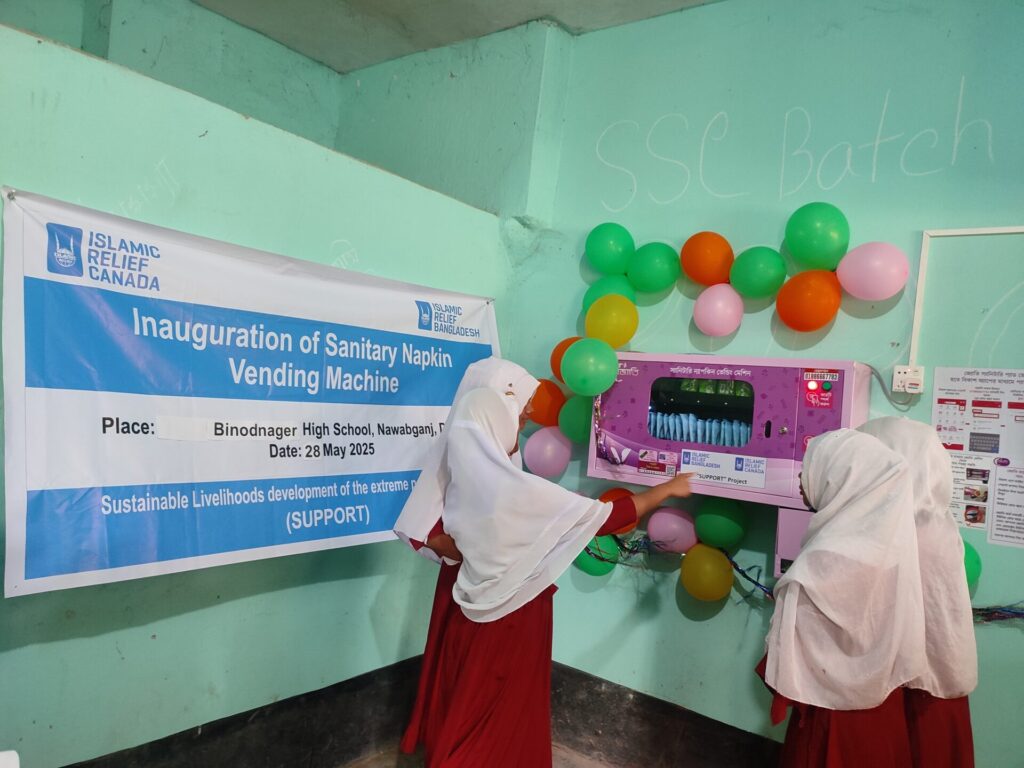
The project goes far beyond just hardware installation. Orientation sessions have been conducted for teachers and students to demonstrate proper use of the machine and foster responsible and hygienic behaviour. Posters and user manuals have been placed near each machine to guide students.
Jannatul Ferdous, a student at Raghunathpur Girls’ High School, expressed her appreciation. “At first, I didn’t understand the purpose of the machine. But after today’s session, I feel very thankful. Now we know how to use it, and it will support us in emergencies. I’m proud that our school is part of something so meaningful.”
Celebrating the programme launch
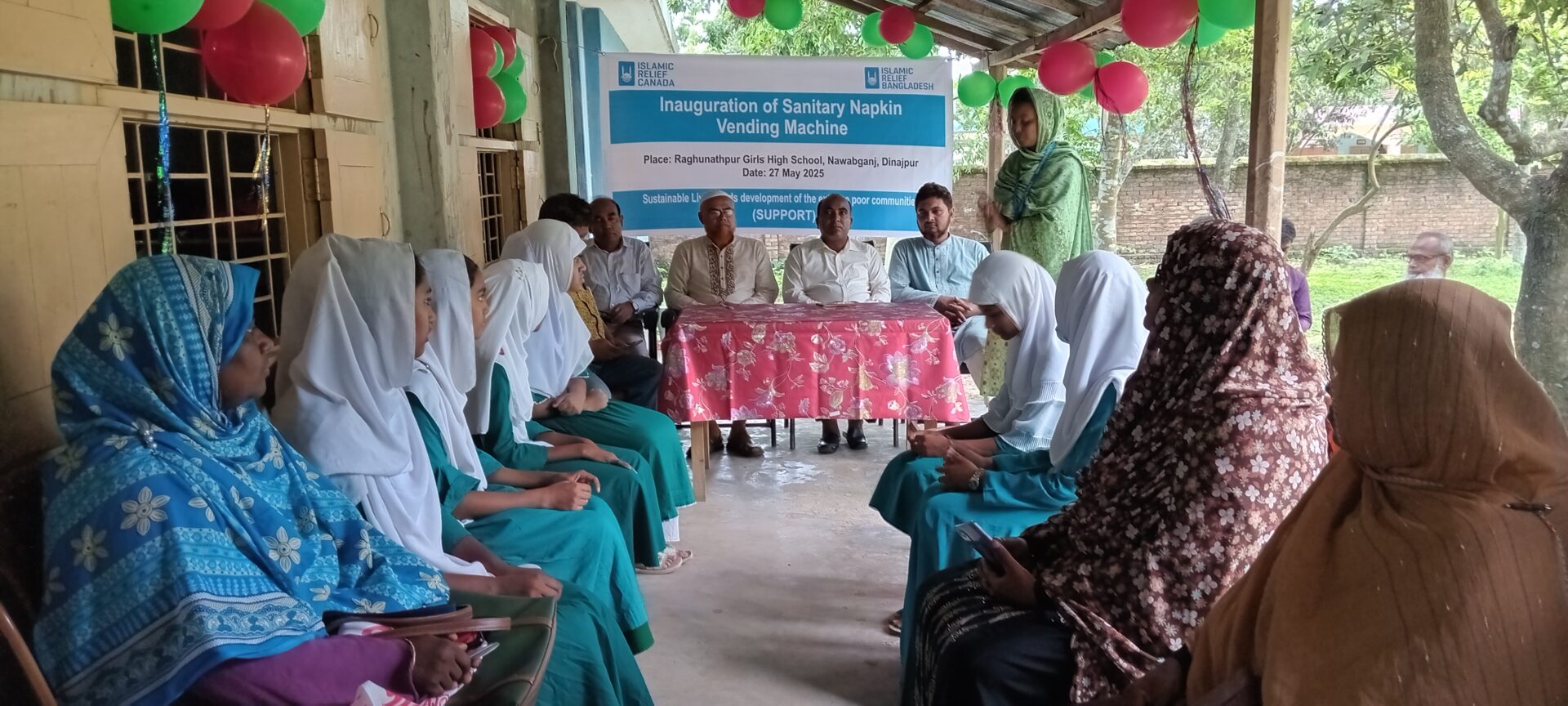
A launch event was recently held at Raghunathpur Girls’ High School in Golapganj, Dinajpur. The event brought together school authorities, students, government officials, and community members.
Kazal Basak, project manager of the SUPPORT project, highlighted that menstrual hygiene is not merely a health issue but also 1 of gender justice and educational continuity.
Nasimul Haque, a local government official, applauded the initiative for tackling a long-overlooked issue and contributing to the government’s gender equity and public health goals.
A sustainable and scalable model for the future
Sustainability lies at the heart of this intervention. For 2 years, the vendor will offer free operational support, including part replacement and monthly refills of 80 sanitary napkins. A 24/7 hotline has been made available for technical support.
School authorities will thereafter assume responsibility for the machines, having been trained and oriented during the project cycle.
Alongside community officials, they will ensure continuity by exploring partnerships with local vendors and mobilising community resources. Local government involvement will be encouraged to promote further expansion in other schools and unions.
Creating long-term impact through inclusion and dignity
This initiative exemplifies Islamic Relief’s unwavering commitment to protection, inclusion, health promotion, and continuity in education.
By ensuring no girl must choose between her menstrual health and her education, the SUPPORT project sends a powerful message: menstrual health matters. Every girl deserves to feel safe, supported, and respected. This pioneering model has the potential to be scaled nationally, removing barriers and championing the cause of inclusive education for all.
Please donate today to support Islamic Relief so we can continue to drive positive social change in Bangladesh and elsewhere.