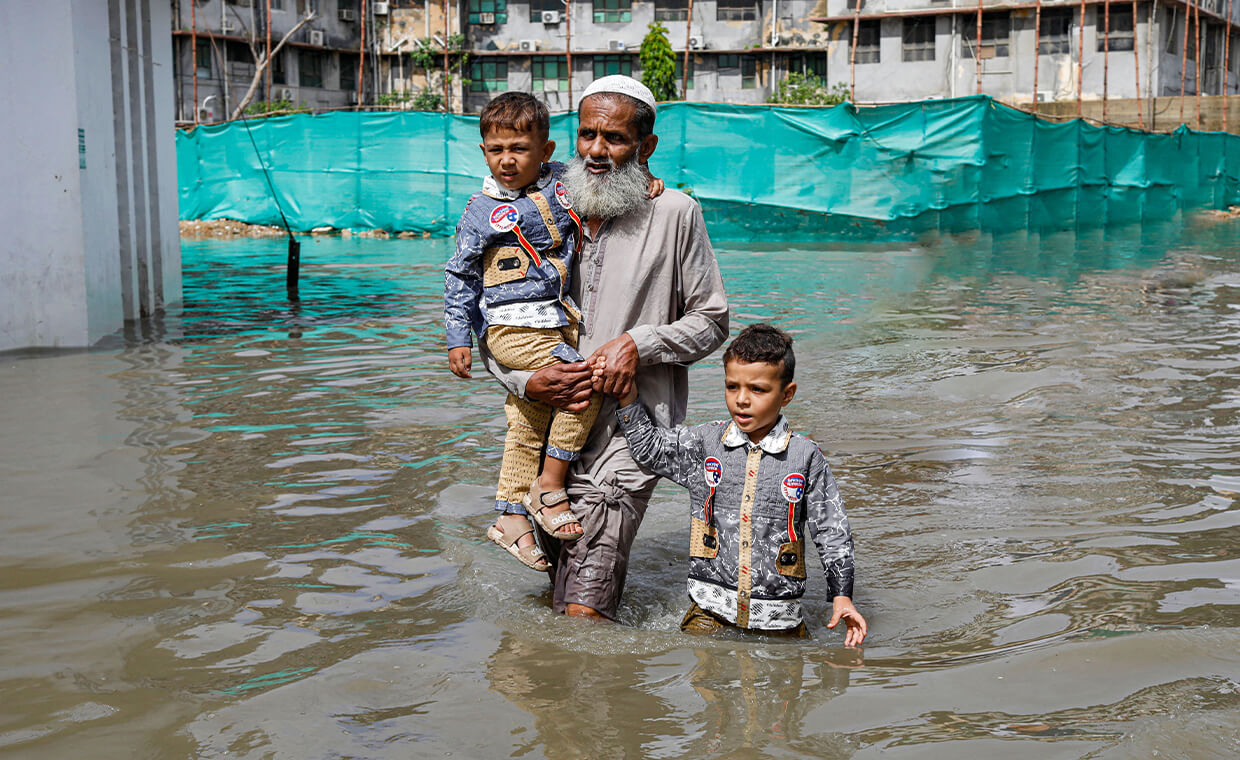
Pregnant women and children are among the people killed in the flash flooding that has engulfed Pakistan, with fears that even worse floods are on their way in the next few days. The province of Baluchistan has experienced its heaviest monsoon rainfall in 30 years with other regions including Sindh, Khyber Pakhtunkhwa and Punjab also badly affected.
At least 419 people are confirmed killed so far but communities fear the actual death toll is much higher. Hundreds more people are injured and around 35,000 homes destroyed or badly damaged as dozens of villages are submerged by water. Many families are now homeless and in urgent need of shelter.
Islamic Relief is stepping up its response to provide emergency aid such as shelter, non-food items and multi-purpose cash grants to 30,000 families.
Asif Sherazi, Islamic Relief’s Country Director in Pakistan, says:
“Climate change is wreaking havoc in Pakistan and vulnerable villagers are bearing the brunt of the impact. In the past couple of months we’ve seen devastating floods across South Asia – in Bangladesh, India and now Pakistan. Thousands of people have died and millions have seen their homes and livelihoods destroyed in an instant. Climate-related disasters are getting more frequent and more severe. People need emergency aid, but we need the international community to take real action to address the climate crisis.”
Muhammad Essa Tahir, Islamic Relief’s Programme Manager in Baluchistan, saw the devastation first-hand:
“Everything happened so quickly that people were barely able to save themselves. It took just a couple of hours to destroy everything. Residents fled to high areas to protect themselves, but many children and pregnant women drowned as they didn’t have the strength to run. There was no time to seek help.
“It’s the worst flood I have seen in my life, it’s affected the entire region. The scale of the destruction is unprecedented.
“People here rely on farming and livestock for their income, and the floods have killed 27,000 animals and destroyed 200,000 acres of crops. This destruction is going to have serious consequences for the economy and push many families here into hunger and poverty.”
As well as homes, more than 60 bridges have collapsed in the floods and almost 1000kms of roads badly damaged. Water facilities were also damaged, leaving many communities without clean drinking water, which could quickly lead to a rise in water-borne diseases. There has already been an increase in the number of mosquitos in the region following the floods.