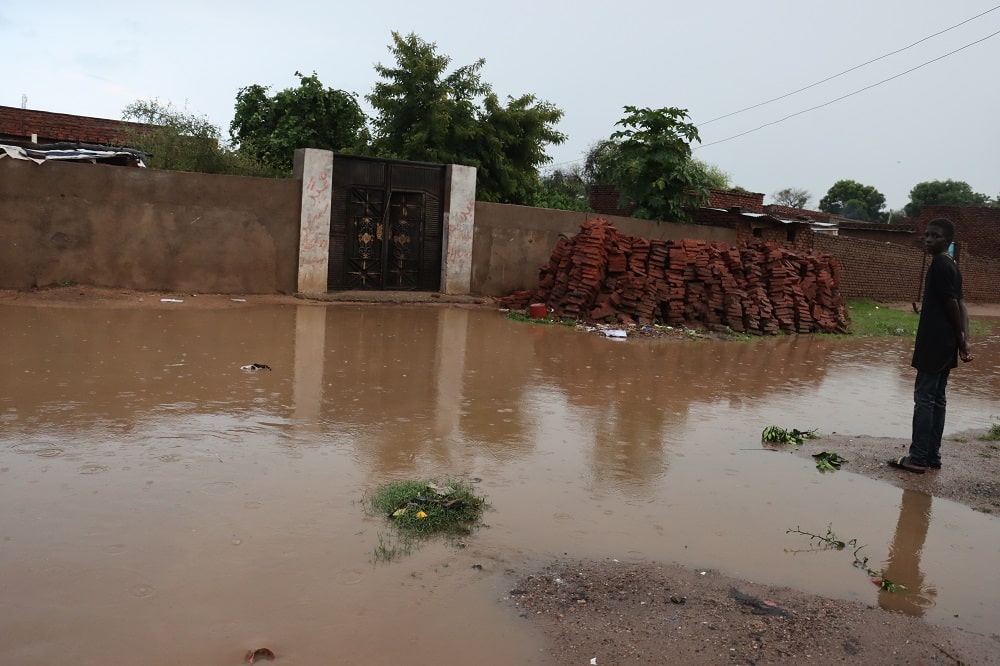
Severe flash floods in Sudan have displaced thousands of people and destroyed homes, businesses and properties. The unprecedented heavy seasonal rains inundated at least 13 states across the country including Darfur, Khartoum, river Nile, Al Manaqil, Al Jazirah and North Kordofan. Nearly 160,000 people have been affected by the floods. Torrential rain has destroyed many farms, worsening the food crisis in the country.
Aya Elfatih, Islamic Relief’s Communication Coordinator, is in Almanagil city:
“The floods destroyed the roads leading to Al Managil. There were many vehicles totally submerged underwater and blocking the way because the water spilt the road into two. We had to stop the car halfway into the city and walk on foot to reach the town as driving became too dangerous. The water level was waist-high. I did not know where I was stepping, and I had to hold my camera and equipment above my head to protect them from the water. The villages surrounding Al Managil were the ones most affected by the floods. Houses and roads were destroyed entirely. I had never seen anything like this in my life.
More than 2500 families lost their houses in the floods and became homeless overnight. I saw some people leaving the city with a few bags and suitcases, but the majority had nowhere else to go and were forced to stay.
Most of the displaced people took refuge in the Elnasheen football stadium, which is now hosting more than 1500 families. The stadium is built in a high area, so it was safe from the water, but the surrounding roads were completely submerged under water and destroyed.
I was mortified by the living conditions when I visited the place for needs assessments. A few families had makeshift tents made of torn clothes and plastic, but the majority had nothing to protect their privacy or dignity.
I spoke with several families, and they told me how their houses were flooded in a matter of minutes that they were barely able to save themselves. They left all their belongings behind and fled without even a change of clothes.
Lack of clean water and inadequate sanitation are the main concerns right now. People dug two big holes in the stadium, which everyone uses for open defecation. There isn’t a way to dispose of the waste, which has the potential to cause serious health problems such as malaria or diarrhoea, especially now that the number of mosquitos has increased after the rain.
Many vulnerable individuals are struggling to survive in these extreme circumstances. I met a couple with four disabled children, and they told me how challenging it was to look after them.
Many medical clinics were destroyed and washed away during the floods, and people now do not have access to health care. A couple of volunteer doctors are currently using a room in the stadium to provide basic medical services to the residents. They told me they have a severe shortage of medicines for all kinds of conditions. A few pharmacists donated some medical supplies, but the needs are still very high.”
People are in urgent need of tents, plastic sheets, blankets, mosquito nets, food, and clean water.