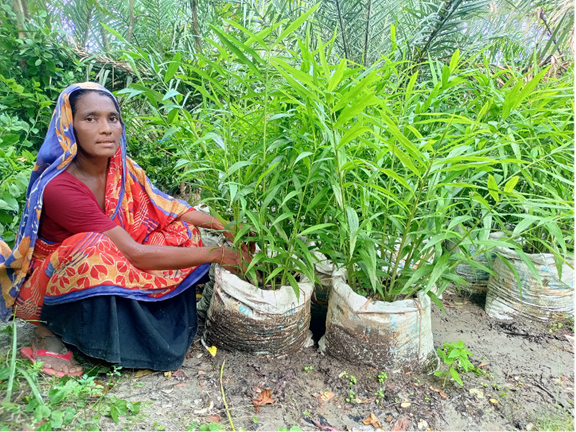
In Moharajpur, Bangladesh, climate change has made life a daily struggle against the elements. Rising sea levels and frequent cyclones have turned once-fertile land into salty, barren fields, leaving communities unable to farm their land.
For 46-year-old Nurunnahar, these challenges hit home. After her husband left to remarry, she cared for their 3 children alone. One daughter has a disability and Nurunnahar faced mounting medical bills with no steady income to support her family.
“I worked wherever I could, carrying bricks, husking rice, labouring on roads, leaving no stone unturned to support my family,” she recalls, her hands rough from years of work. “At night, I sewed clothes by candlelight because we had no electricity. But it was never enough.”
As seawater contaminated the soil, farming became impossible. Crops failed and food became scarce, leaving communities fighting to survive.
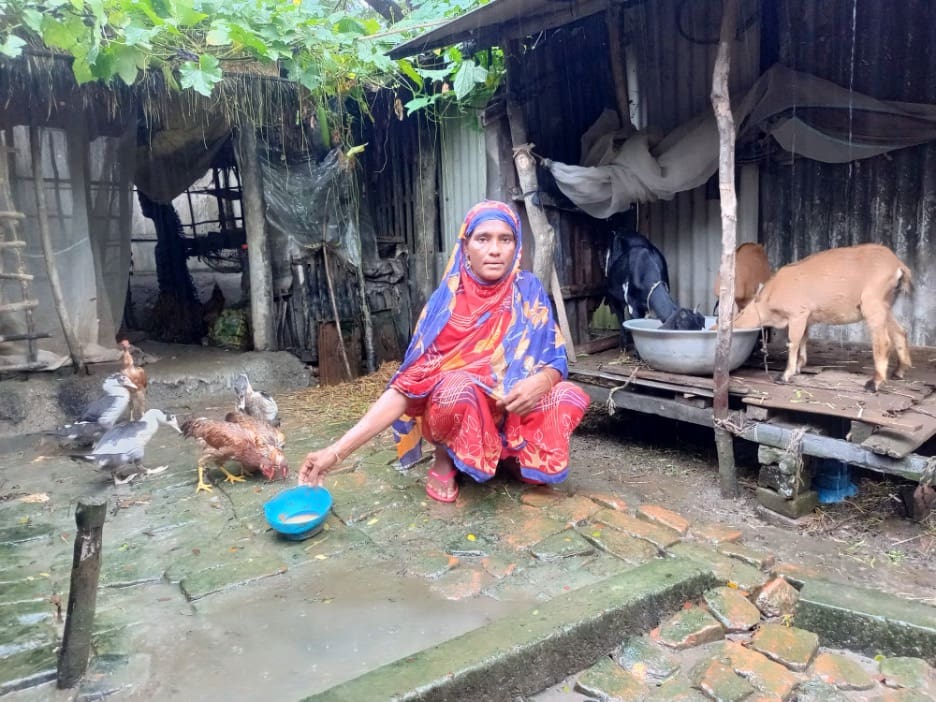
Nurunnahar feeding her animals
Turning to climate-adaptive agriculture
Nurunnahar’s situation began to improve when she joined a Self-Help Group (SHG) through Islamic Relief’s Islamic Climate Resilience Alliance (ICRA) project.
The SHG model encourages villagers to share resources and knowledge, with a focus on empowering women and supporting community growth.
Through the group, she learned about financial management and accessed interest-free emergency loans.
With a grant of BDT 18,000 (116.72 GBP) from the ICRA Project, Nurunnahar bought an old sewing machine. Orders from neighbours started coming in, and her income began to grow. But the real change happened when she adopted climate-adaptive farming.
“I started growing beetroot and aubergine, crops that can handle the salty soil,” she explains. “With training from Islamic Relief, I also started sack gardening, growing tomatoes, chilli and ginger.”
The extra crops not only fed her family but provided enough to sell at the local market. The additional income meant Nurunnahar could afford better food for her children, including fish and meat, which had once been out of reach.
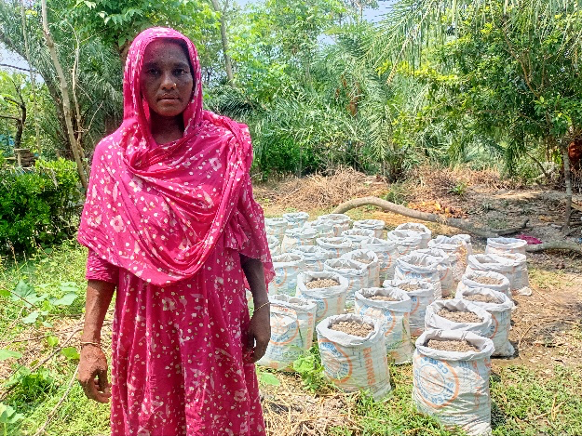
Nurunnahar in a sack garden where she grows various vegetables to provide for her children
Building community resilience to climate change
Islamic Relief’s work in Moharajpur is part of a larger effort to help vulnerable communities adapt to climate change. By introducing saline-resistant crops and new farming methods, we are helping people adjust to the changing environment.
“Climate change isn’t a distant issue here; it’s a daily challenge,” says Sharmin Ruba, External Relations and Communications Manager at Islamic Relief Bangladesh. “We aim to empower individuals like Nurunnahar to not only survive but thrive in these conditions.”
Inspiring others
Nurunnahar’s transformation from a struggling single mother to a successful farmer and entrepreneur is inspiring others in her village. Her son has returned to school, and her daughter’s health has improved with better nutrition.
“Life is still hard, but now I have hope,” she says. “I’ve learned that even when the land changes, we can adapt.”
As world leaders gather at COP29 to discuss climate action, stories like Nurunnahar’s highlight the urgent need for adaptive strategies in vulnerable communities. “We need more funding for adaptation, not just mitigation, because Bangladesh is not a major contributor to global warming. We want climate justice,” says Anwar Hossain, Islamic Relief’s Deputy Programme Manager for Climate Change Adaptation and Resilience.
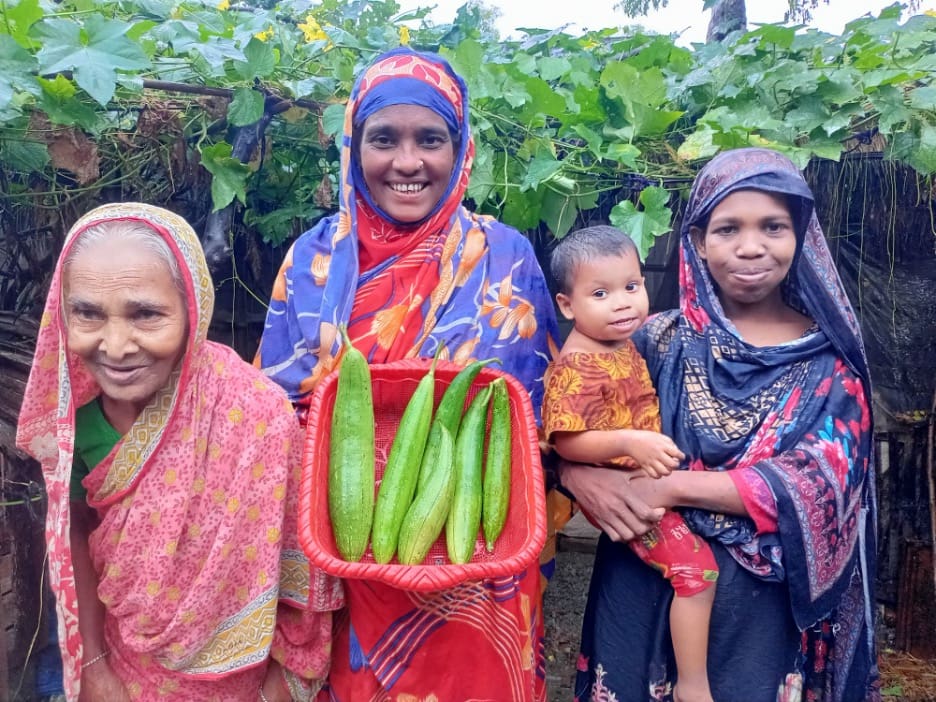
Nurunnahar with her family, whose situation has markedly improved since she joined ICRA
A way forward
The resilience shown by the residents of Moharajpur demonstrates the value of community-led initiatives and climate-adaptive practices.
Islamic Relief’s efforts to promote sustainable farming not only address the immediate impacts of salinity and cyclones but also create a foundation for long-term economic stability.
In the face of adversity, Nurunnahar and her village are leading the way, offering a model for other communities on the frontline of climate change.
Join Islamic Relief in empowering communities like Moharajpur and tackling climate injustice. Donate today.