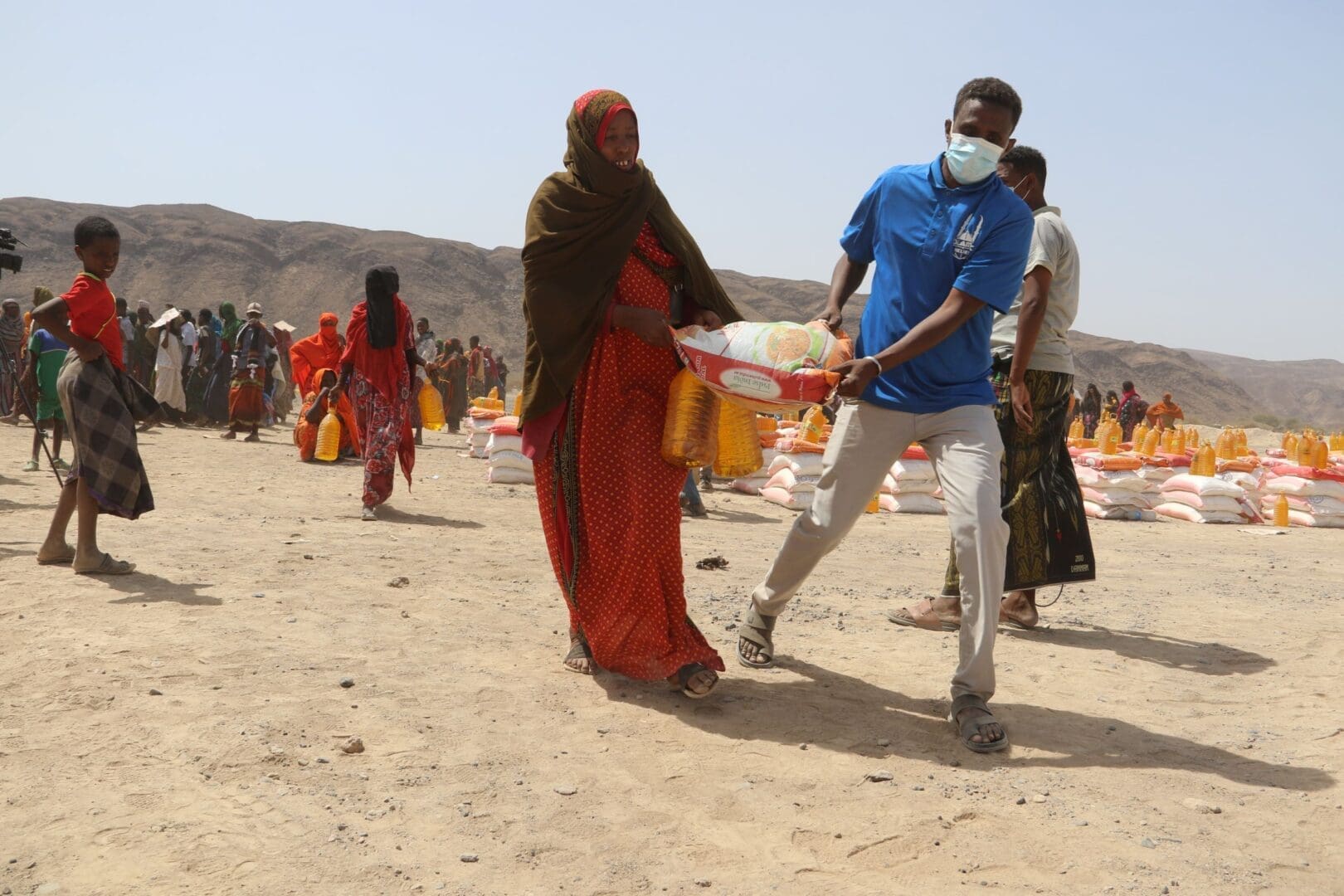
“We urge the international community to put the full force of resources, diplomacy, and policy action behind preventing large-scale loss of life due to hunger and promoting lasting food security for millions of people around the globe.”
18 May 2022
This week, world leaders will turn their attention to the global hunger crisis in two pivotal events organized by the United States: a ministerial-level meeting on May 18 and a Security Council open debate on May 19. The overarching aim of these events is to catalyze action on global food security and resilience, focusing on the critical links between conflict and hunger, including the impacts of the war in Ukraine.
As humanitarian and development organizations working around the world to prevent and respond to unprecedented levels of food insecurity and the imminent threat of famine we face today, we commend the United States for bringing this urgent crisis to the top of the agenda during its presidency of the UN Security Council. We urge governments to seize this opportunity to make concrete and substantial commitments to address the needs identified by affected states, civil society, and people experiencing hunger.
Global food security has steadily worsened over the past several years. According to the 2022 Global Report on Food Crises, nearly 193 million people experienced crisis level or worse food insecurity in 2021, an increase of almost 40 million over the previous record in 2020. The negative food security outlook is projected to continue or worsen this year, and the global food systems impact of the crisis in Ukraine will only contribute to further decline.
The global hunger crisis is felt most by vulnerable and marginalized people with limited capacity to absorb additional shocks. This includes women and girls who, despite the key role they play in producing and preparing food, often eat last and least during times of acute food insecurity, are at higher risk of experiencing gender-based violence and various forms of exploitation and abuse, and are frequently excluded from conversations about how to address food insecurity. Food insecurity and malnutrition also has a devastating impact on children, exposing them to immediate and life-long cognitive and developmental impacts, weakening their immune system, and leading to negative household coping strategies like child labor, withdrawal of children from school, and gender-based violence, including child marriage and other forms of violence against children.
The ongoing conflict in Ukraine and resulting disruption to food, fuel, and fertilizer markets has exacerbated an existing food crisis driven by conflict, climatic shocks, COVID-19, and economic pressures, particularly in contexts already experiencing humanitarian crises. In order to pull people back from the brink of starvation, create sustainable food systems, and prevent future food crises, we need comprehensive solutions that address the myriad drivers and impacts of food insecurity.
Global humanitarian funding to prevent and respond to food insecurity is critical, and the international community must see this moment as a tipping point to avert catastrophe. However, emergency aid alone is not enough to end this crisis. Donors must get better at leveraging longer-term funding mechanisms to get ahead of rising global hunger levels and promote resilience. States must also engage in concerted diplomacy and cooperation to put forward rights-based trade, economic, climate, food systems, and social protection policies, and avoid restrictive trade measures that threaten to plunge millions more people into acute food insecurity.
In support of this, state, donor, multilateral, and other stakeholders seeking to address global food security, including conflict-induced hunger, should take the following concrete steps:
First, prioritize inclusive diplomacy to address the root causes of food insecurity and support policy measures that protect poor and vulnerable people’s ability to access food and livelihoods. This includes keeping ports and trade flows open, mitigating balance of payment pressures, investing in social protection and safety nets, and supporting domestic food production and equitable distribution of land which empowers small scale producers, including women. It also requires upholding the protection of civilians and civilian objects during conflict and addressing the effects of climate change on food security by delivering on commitments to finance climate action from the Paris Agreement and operationalize the Santiago Network.
Second, protect and increase funding to respond to the short, medium, and long-term impacts of the food security crisis. Donors should increase assistance toward global humanitarian appeals, maintain Official Development Assistance (ODA) commitments, and refrain from diverting aid from pre-existing crises to respond to new emergencies, including the Ukraine crisis and domestic refugee responses. Efforts should be made to direct aid to local organizations, including women-led organizations, that are already responding to hunger in their communities. Additionally, donors should scale up predictable, multi-year funding for humanitarian, development, and peacebuilding programs to strengthen resilience, ensuring that funding and programs are cohesive, coordinated, and gender transformative.
Third, tailor food assistance modalities – including cash, vouchers, in-kind food assistance, and livelihoods and agricultural support – to each context. While the overall goal of assistance is to immediately save lives, careful consideration of aid modalities can help to increase resilience to global market disruptions. Donors should recognize that cash and vouchers can reach hungry people in crisis more quickly than commodity support in the short-term. Increasing support to small-scale farmers and sustainable agriculture practices, such as agroecology and renewable energy for agricultural production, is critical to increase livelihoods and help farmers cope with rising fuel prices and reduced access to fertilizers and other inputs.
Finally, the Security Council must address conflict-induced hunger by fully implementing UNSC Resolutions 2417 (2018) and 2573 (2021). Monitoring and reporting on the risk of famine and food insecurity in countries with armed conflict should be more systematic, and swift follow-up action must be taken to hold perpetrators of violations of international humanitarian law accountable. Denial of access to deliver humanitarian assistance, the use of hunger as a weapon of war, and acts of violence that threaten or harm civilians or destroy critical civilian infrastructure, whether intentional or not, cannot be tolerated. Member States, particularly donors, must strengthen their humanitarian diplomacy to prevent these violations of international humanitarian law and respond to such incidents when they occur.
We hope these critical meetings serve as a first step in a sustained global effort to address the drivers and humanitarian impact of the global hunger crisis. It is essential that the goodwill and commitments put forward this week are translated into immediate and sustained action.
We urge the U.S. government and other Member State participants to keep their attention on this crisis and promote accountability by identifying opportunities for continued high-level engagement and progress-tracking. The G7 Leaders’ Summit in June and the UN General Assembly in September are high visibility moments to galvanize this momentum into tangible outcomes.
The world cannot wait for a declaration of famine to act. By then, it will be too late. We urge the international community to put the full force of resources, diplomacy, and policy action behind preventing large-scale loss of life due to hunger and promoting lasting food security for millions of people around the globe.
Endorsing Organizations:
As humanitarian and development organizations working around the world to prevent and respond to unprecedented levels of food insecurity and the imminent threat of famine we face today, we commend the United States for bringing this urgent crisis to the top of the agenda during its presidency of the UN Security Council. We urge governments to seize this opportunity to make concrete and substantial commitments to address the needs identified by affected states, civil society, and people experiencing hunger.
Global food security has steadily worsened over the past several years. According to the 2022 Global Report on Food Crises, nearly 193 million people experienced crisis level or worse food insecurity in 2021, an increase of almost 40 million over the previous record in 2020. The negative food security outlook is projected to continue or worsen this year, and the global food systems impact of the crisis in Ukraine will only contribute to further decline.
The global hunger crisis is felt most by vulnerable and marginalized people with limited capacity to absorb additional shocks. This includes women and girls who, despite the key role they play in producing and preparing food, often eat last and least during times of acute food insecurity, are at higher risk of experiencing gender-based violence and various forms of exploitation and abuse, and are frequently excluded from conversations about how to address food insecurity. Food insecurity and malnutrition also has a devastating impact on children, exposing them to immediate and life-long cognitive and developmental impacts, weakening their immune system, and leading to negative household coping strategies like child labor, withdrawal of children from school, and gender-based violence, including child marriage and other forms of violence against children.
The ongoing conflict in Ukraine and resulting disruption to food, fuel, and fertilizer markets has exacerbated an existing food crisis driven by conflict, climatic shocks, COVID-19, and economic pressures, particularly in contexts already experiencing humanitarian crises. In order to pull people back from the brink of starvation, create sustainable food systems, and prevent future food crises, we need comprehensive solutions that address the myriad drivers and impacts of food insecurity.
Global humanitarian funding to prevent and respond to food insecurity is critical, and the international community must see this moment as a tipping point to avert catastrophe. However, emergency aid alone is not enough to end this crisis. Donors must get better at leveraging longer-term funding mechanisms to get ahead of rising global hunger levels and promote resilience. States must also engage in concerted diplomacy and cooperation to put forward rights-based trade, economic, climate, food systems, and social protection policies, and avoid restrictive trade measures that threaten to plunge millions more people into acute food insecurity.
In support of this, state, donor, multilateral, and other stakeholders seeking to address global food security, including conflict-induced hunger, should take the following concrete steps:
First, prioritize inclusive diplomacy to address the root causes of food insecurity and support policy measures that protect poor and vulnerable people’s ability to access food and livelihoods. This includes keeping ports and trade flows open, mitigating balance of payment pressures, investing in social protection and safety nets, and supporting domestic food production and equitable distribution of land which empowers small scale producers, including women. It also requires upholding the protection of civilians and civilian objects during conflict and addressing the effects of climate change on food security by delivering on commitments to finance climate action from the Paris Agreement and operationalize the Santiago Network.
Second, protect and increase funding to respond to the short, medium, and long-term impacts of the food security crisis. Donors should increase assistance toward global humanitarian appeals, maintain Official Development Assistance (ODA) commitments, and refrain from diverting aid from pre-existing crises to respond to new emergencies, including the Ukraine crisis and domestic refugee responses. Efforts should be made to direct aid to local organizations, including women-led organizations, that are already responding to hunger in their communities. Additionally, donors should scale up predictable, multi-year funding for humanitarian, development, and peacebuilding programs to strengthen resilience, ensuring that funding and programs are cohesive, coordinated, and gender transformative.
Third, tailor food assistance modalities – including cash, vouchers, in-kind food assistance, and livelihoods and agricultural support – to each context. While the overall goal of assistance is to immediately save lives, careful consideration of aid modalities can help to increase resilience to global market disruptions. Donors should recognize that cash and vouchers can reach hungry people in crisis more quickly than commodity support in the short-term. Increasing support to small-scale farmers and sustainable agriculture practices, such as agroecology and renewable energy for agricultural production, is critical to increase livelihoods and help farmers cope with rising fuel prices and reduced access to fertilizers and other inputs.
Finally, the Security Council must address conflict-induced hunger by fully implementing UNSC Resolutions 2417 (2018) and 2573 (2021). Monitoring and reporting on the risk of famine and food insecurity in countries with armed conflict should be more systematic, and swift follow-up action must be taken to hold perpetrators of violations of international humanitarian law accountable. Denial of access to deliver humanitarian assistance, the use of hunger as a weapon of war, and acts of violence that threaten or harm civilians or destroy critical civilian infrastructure, whether intentional or not, cannot be tolerated. Member States, particularly donors, must strengthen their humanitarian diplomacy to prevent these violations of international humanitarian law and respond to such incidents when they occur.
We hope these critical meetings serve as a first step in a sustained global effort to address the drivers and humanitarian impact of the global hunger crisis. It is essential that the goodwill and commitments put forward this week are translated into immediate and sustained action.
We urge the U.S. government and other Member State participants to keep their attention on this crisis and promote accountability by identifying opportunities for continued high-level engagement and progress-tracking. The G7 Leaders’ Summit in June and the UN General Assembly in September are high visibility moments to galvanize this momentum into tangible outcomes.
The world cannot wait for a declaration of famine to act. By then, it will be too late. We urge the international community to put the full force of resources, diplomacy, and policy action behind preventing large-scale loss of life due to hunger and promoting lasting food security for millions of people around the globe.
Endorsing Organizations:
- Action Against Hunger
- ADRA
- Bread for the World
- CAFOD
- CARE International
- ChildFund Alliance
- Christian Aid
- Concern Worldwide
- Dignidad y Justicia en el Camino A.C.
- Dochas
- Danish Refugee Council (DRC)
- Ethiopian Community Development Council
- Foundation for Rural Development Pakistan
- Global Communities
- Global Refugee Youth Network (GRYN)
- Helping Hand for Relief & Development
- Humanity & Inclusion
- IMPACT Initiatives
- InterAction
- International Medical Corps
- International Rescue Committee
- INTERSOS
- Islamic Relief USA
- Mercy Corps
- Norwegian Church Aid (NCA)
- Norwegian People’s Aid (NPA)
- Norwegian Refugee Council
- Oxfam International
- People in Need
- Plan International
- Polish Humanitarian Action (PAH)
- Refugees International
- Save the Children
- Solidarités International
- The Hunger Project
- Water for South Sudan, Inc.
- Welthungerhilfe
- Women for Women International
- Women’s Refugee Commission
- World Vision